

Benefits of Small Batch Roasted Coffee
Table of Contents
- What Small Batch Roasted Coffee Actually Means
- Small-Batch Coffee vs. Mass-Produced Coffee: The Real Differences
- Flavor Clarity and Why Freshness Matters
- How Long to Rest Coffee After Roasting (and Why It Matters)
- How to Store Freshly Roasted Coffee to Keep It Fresh
- The Trade-Offs and Limitations of Small Batch Roasted Coffee
- Conclusion
- Frequently Asked Questions
Last Updated: October 7, 2026
What Small Batch Roasted Coffee Actually Means
The benefits of small batch roasted coffee start with the roast itself: coffee roasted in limited quantities, typically in drums holding a few kilograms to a few dozen kilograms, with the roastmaster adjusting temperature and airflow throughout each individual roast. At Al Di Là, we roast to order for exactly this reason: the smaller the batch, the more control you have over the outcome in the cup.
That definition matters because "small batch" gets used loosely. A regional roaster running 30-kilogram drums and a craft roaster running 5-kilogram drums both claim the term. The real dividing line is attention per bean, not a number on a label.
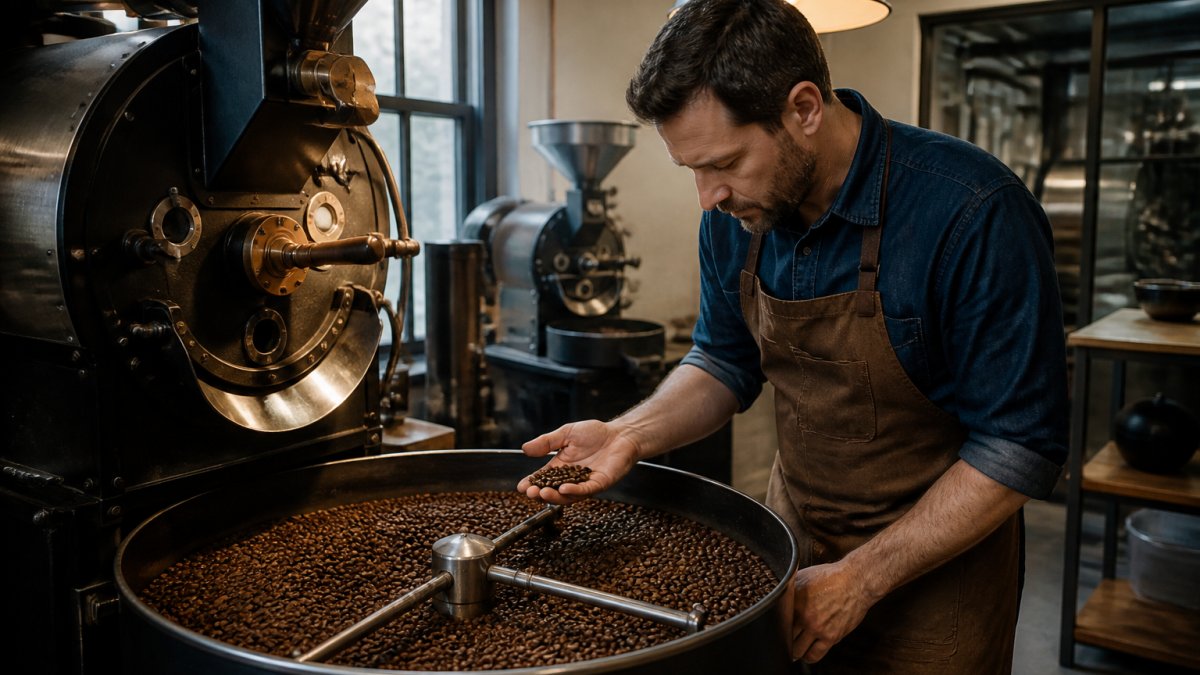
How Batch Size Varies Across Roasters
Batch size is not standardized, and that is the first thing to understand. A micro-roaster might run 1 to 5 kilograms per roast. A mid-size craft roaster might run 15 to 30 kilograms. Commercial operations can run hundreds of kilograms per batch, continuously.
The practical consequence: a 5-kilogram batch gives the roastmaster room to react to what the beans are doing. A 300-kilogram batch does not. Once you push past a certain volume, you are managing a process, not a roast.
Small-Batch Coffee vs. Mass-Produced Coffee: The Real Differences
The core difference between small-batch coffee and mass-produced coffee is not romance, it is the roast curve. In a small batch, the roastmaster can steer temperature and timing in response to what the beans are doing. In a large batch, the schedule steers the roast, and consistency is achieved by removing variables rather than responding to them.
Freshness timing. Small roasters typically roast to order or in small runs, so the gap between roast date and your grinder is short. Large operations roast for distribution and shelf life, which means beans may sit for weeks before you open the bag. The advantage is real but conditional: it only holds if the roaster ships quickly.
Roaster control. A 5-kilogram drum gives the roastmaster room to react mid-roast, adjusting gas, airflow, and damper position as the bean temperature and rate of rise change. A 300-kilogram drum does not. Once you push past a certain volume, you are managing a process, not a roast.
Consistency. Here the advantage flips. A large commercial roaster can deliver the same cup every time because it removes variables: fixed profiles, blended lots, and dark roasts that smooth over harvest variation. A small roaster chasing the best expression of a given harvest will produce batches that differ slightly. Some drinkers love this. Others want predictability.
Cost. Small-batch coffee costs more per pound. Labor per bag is higher, green coffee buys are smaller and often priced at a premium, and throughput is lower. You are paying for attention, and attention does not scale. Expect to pay more, and expect the premium to reflect the roaster's sourcing and process, not just the batch size.
Waste and overproduction. Large operations roast to forecast, which means unsold inventory, stale stock, and discarded lots when demand misses the plan. Small roasters roast closer to actual demand, which reduces overproduction and the coffee waste that comes with it.
Availability. Small roasters sell out. A single-origin lot may be gone in weeks, and the next harvest may taste different. If you find a coffee you love, buy enough to last, or accept that the next lot will be its own thing.
If you want a coffee that tastes like where it came from, small-batch roasting is the mechanism that makes it possible. If you want the same cup every morning regardless of harvest, a large commercial roaster will serve you better.
Flavor Clarity and Why Freshness Matters
Flavor clarity is the degree to which you can taste a coffee's origin characteristics, its acidity, sweetness, and aroma, without them being muddied by staleness or an overly dark roast. Two mechanisms drive it: what happens inside the bean during the roast, and what happens to the bean after the roast. Small-batch roasting influences both.
Inside the roast. Green coffee carries hundreds of aromatic precursors. Heat triggers two reactions that build flavor: the Maillard reaction, which develops browning and savory-sweet complexity, and caramelization, which builds sweetness and body. Both are governed by how fast the bean's temperature rises, how long it stays in each phase, and how much airflow carries heat and moisture out of the drum. A roastmaster working a small drum can slow the ramp into first crack, extend development time, or open airflow to clear chaff and smoke. Those adjustments shift the cup toward more acidity and floral notes, or toward more chocolate and caramel, without changing the green coffee. On a large drum, the same adjustments are coarser and slower to take effect, so the roast tends to land in a narrower band.
After the roast. Coffee begins losing aromatics the moment it leaves the roaster. Oxygen oxidizes the oils, moisture and heat accelerate the reaction, and light breaks down compounds that carry origin character. A small-batch roaster who ships within days of roasting hands you a product near its peak. A bag that has been warehoused for months is not the same product, even if the label is identical.
Single Origin Favorites Sample Pack →
This is where roast variables and freshness intersect. A light or medium roast preserves more of the bean's origin characteristics, but only if it reaches you before oxidation flattens them. A very dark roast can mask origin character, which is one reason high-volume commercial roasts lean dark: it is a reliable way to produce a consistent cup from inconsistent green coffee. Freshness does not create flavor; it preserves the flavor the roast developed.
A practical way to test this at home: buy the same origin from two roasters, one that prints a roast date and one that prints only a best-by date, and brew both at the same dose, grind, and water temperature. The difference you taste is the combined effect of roast development and time since roast.
How Long to Rest Coffee After Roasting (and Why It Matters)
The ideal rest time for freshly roasted coffee is roughly 4 to 14 days after the roast date for most brewing methods, though this varies by roast level and brew style. Resting lets the beans degas, releasing carbon dioxide that would otherwise interfere with extraction.
Here is how rest time shifts by method:
| Brew Method | Typical Rest Time | Why |
|---|---|---|
| Espresso | 7-14 days | Needs full degassing for stable extraction |
| Pour-over | 4-10 days | Balances clarity and bloom behavior |
| French press | 5-12 days | Tolerates a wider freshness window |
| Cold brew | 3-7 days | Long steep time compensates for CO2 |
Roast level changes the math. Darker roasts degas faster and are often drinkable sooner. Lighter roasts, particularly the medium-light profiles we favor for our Ethiopia Natural, need more time to settle.

The practical takeaway: check the roast date, not the expiration date. A bag roasted last week is usually better than one roasted last month, regardless of what the label says.
How to Store Freshly Roasted Coffee to Keep It Fresh
The best way to store freshly roasted coffee is in an airtight, opaque container at room temperature, away from heat, light, and moisture. Whole beans stored this way hold their peak flavor for roughly two to four weeks after the roast date.
What to avoid:
- The fridge. Condensation and food odors migrate into the beans. Skip it.
- The freezer, done carelessly. Freezing works if you seal beans in an airtight bag, freeze immediately after roasting, and never thaw and refreeze. Done halfway, it introduces moisture and accelerates staling.
- Clear canisters on the counter. Light degrades coffee oils. If the container is transparent, move it to a cabinet.
- Grinding in advance. Ground coffee stales in hours, not weeks. Grind just before brewing.
If you want to taste what small-batch roasting actually delivers, start with our Single Origin Favorites Sample Pack, six 2-ounce packs spanning Brazil, Colombia, Costa Rica, Ethiopia, Honduras, and Tanzania. It is the fastest way to learn which origin characteristics you actually prefer before committing to a full bag.

The Trade-Offs and Limitations of Small Batch Roasted Coffee
Small-batch roasting is not strictly better in every dimension, and pretending otherwise does the reader a disservice. The honest trade-offs:
- Cost per pound runs higher. Labor, smaller green coffee buys, and lower throughput all push the price up. You are paying for attention, and attention does not scale.
- Consistency varies more. A large commercial roaster can deliver the same cup every time. A small roaster chasing the best expression of a given harvest will produce batches that differ slightly. Some drinkers love this. Others want predictability.
- Availability is limited. Small roasters sell out. A single-origin lot may be gone in weeks, and the next harvest may taste different.
- Freshness depends on logistics. Small-batch roasting only delivers its advantage if the coffee reaches you quickly. A small roaster with slow shipping undercuts the entire premise.
Conclusion
The gap between a bag roasted this week and one that sat in a warehouse for two months is not subtle, and it is the whole case for the benefits of small batch roasted coffee. Choosing a roaster who roasts to order, ships fast, and tells you the roast date is the difference between drinking coffee and tasting it.
Al Di Là roasts to order so every bag arrives near its peak, seals capsules oxygen-free to protect aroma, and sources beans with the origin detail that makes flavor clarity possible. Get started with Al Di Là and taste what fresh, carefully roasted coffee actually delivers.
Frequently Asked Questions
Is small batch coffee actually better than mass-produced coffee?
Small batch coffee is roasted in smaller quantities, which allows the roastmaster to monitor temperature and timing closely. This precision means each batch develops evenly, preserving origin characteristics like acidity, sweetness, and aroma. Mass-produced coffee is roasted in large volumes where individual batch attention is limited, often leading to less consistency and staler beans by the time they reach shelves. The benefits of small batch roasted coffee come down to fresher beans and better control over the roasting process.
How long should you wait to drink freshly roasted coffee?
Most small batch roasted coffee reaches its best flavor 3 to 7 days after the roast date. During the first few days, beans release carbon dioxide in a process called degassing, which can interfere with extraction and create excess foam. Waiting a few days allows the flavors to settle. For espresso, 5 to 10 days is often ideal. For pour-over or drip, 3 to 5 days works well. Always check the roast date on the bag, not just the best-by date.
How should you store small batch coffee to keep it fresh?
Store freshly roasted coffee in an airtight, opaque container at room temperature, away from light, heat, and moisture. Do not refrigerate or freeze unless you plan to store it for more than two weeks; freezing can work if the beans are in a vacuum-sealed bag, but repeated temperature changes harm flavor. Buy only what you will drink within two to three weeks. Whole beans stay fresh longer than ground coffee, so grind just before brewing.
Does small batch coffee taste fresher than store-bought coffee?
Yes, in most cases. Small batch roasters typically ship within days of roasting, so the coffee you receive is often less than a week old. Store-bought coffee may sit in warehouses and on shelves for weeks or months before purchase. Since coffee flavor peaks within the first few weeks after roasting, that shorter timeline from roaster to cup makes a noticeable difference in aroma, acidity, and overall cup quality.