

Best Coffee Beans for Daily Drinking: 2026 Guide
Table of Contents
- Why Most Daily Coffee Beans Disappoint
- How to Identify High Quality Coffee Beans
- Best Brewing Methods for Daily Coffee
- How to Store Coffee Beans for Freshness
- The Cost per Cup of Better Coffee Beans
- Decaf and Low-Acid Beans for Daily Drinking
- Matching the Best Coffee Beans for Daily Drinking to Your Equipment
- Conclusion
- Frequently Asked Questions
Last Updated: September 24, 2026
Why Most Daily Coffee Beans Disappoint
The best coffee beans for daily drinking are freshly roasted whole beans with a visible roast date, stored away from oxygen, light, and heat. This guide from Al Di Là explains how to pick, store, and brew beans that stay good past the first week.
Walk through the coffee aisle and you will see bags stamped with "best by" dates a year out. That tells you almost nothing. Coffee is a fresh product, and freshness is the whole game.
The uncomfortable truth most guides skip: the disappointment rarely comes from bad beans, but from old ones. A bag roasted eight months ago tastes flat no matter what you paid for it.
Below, we show you how to read a label, store beans so they last, and match the right bag to your brewer, the practical decisions, not the marketing.
The Shelf Life Problem
Coffee beans start losing aroma and flavor within days of roasting, not months. Oxygen is the main culprit, followed by light and heat, which is why roast date matters more than any badge on the bag.
Most supermarket coffee sits in a warehouse, then a distribution center, then a shelf. By the time you brew it, the peak has passed. Many daily drinkers blame their brewing skills for a flat cup when the real issue is a stale bag.
How to Identify High Quality Coffee Beans
High quality coffee beans are freshly roasted, whole, and traceable to a specific origin, roast level, and processing method. Four label details tell you most of what you need: roast date, origin, roast level, and whole vs. ground.
Start with the roast date. Anything roasted within the last two to four weeks is a strong candidate for daily brewing; beyond that, flavor fades fast.
Next, scan for origin and processing method. Terms like single origin, washed, and natural tell you how the beans were handled and what flavor to expect.
- Single origin: beans from one region, often with clearer, more distinct tasting notes
- Blend: beans from multiple regions, built for balance and consistency
- Washed process: cleaner, brighter cup with more acidity
- Natural process: fruitier, heavier body, sometimes sweeter
Then check the roast level. Medium roast tends to balance sweetness and acidity, which suits most daily drinkers. Dark roast pushes toward bold, smoky, and bitter notes.
Reading the Roast Date and Origin Label
The roast date is the single most useful number on a coffee bag. It tells you when the clock started, and coffee's best window is short.
Origin labels add context: a single origin from a high-altitude farm often carries more acidity and fruit, while a blend built for espresso leans chocolatey and nutty.
Look for a harvest or roast date, region, altitude, and processing method. If a bag lists none of these, treat it as a commodity product, not specialty coffee.
Whole Bean vs. Pre-Ground for Daily Use
Whole bean coffee stays fresh far longer than pre-ground, because grinding exposes surface area to oxygen. If you own a grinder, buy whole bean and grind just before brewing.
Pre-ground is reasonable if you use it within a week or two; beyond that, flavor drops off noticeably.
Grind consistency matters too. A grind matched to your brewer gives even extraction; too coarse tastes weak and sour, too fine turns bitter and harsh.
Best Brewing Methods for Daily Coffee
The best brewing method for daily coffee is the one that fits your morning routine and produces a cup you enjoy repeating. Drip, pour over, cold brew, and espresso each suit different beans and schedules.
Drip coffee makers win on convenience and reward a medium roast with balanced sweetness and a clean finish. Use a medium grind and roughly one to two tablespoons of coffee per six ounces of water.
Pour over gives you more control, highlighting single origin beans and their acidity, body, and aroma. It takes a few extra minutes, and many daily drinkers find that ritual worth it.
Cold brew steeps for hours and produces a smooth, low-acid cup. It works well with darker roasts and holds in the fridge for several days.
Espresso needs a finer grind and a bean built for pressure.
| Brew Method | Best Bean Style | Grind | Time |
|---|---|---|---|
| Drip | Medium roast, blend | Medium | 4-6 min |
| Pour over | Single origin, light-medium | Medium-fine | 3-4 min |
| Cold brew | Dark roast, blend | Coarse | 12-18 hrs |
| Espresso | Espresso blend | Fine | 25-30 sec |
How to Store Coffee Beans for Freshness
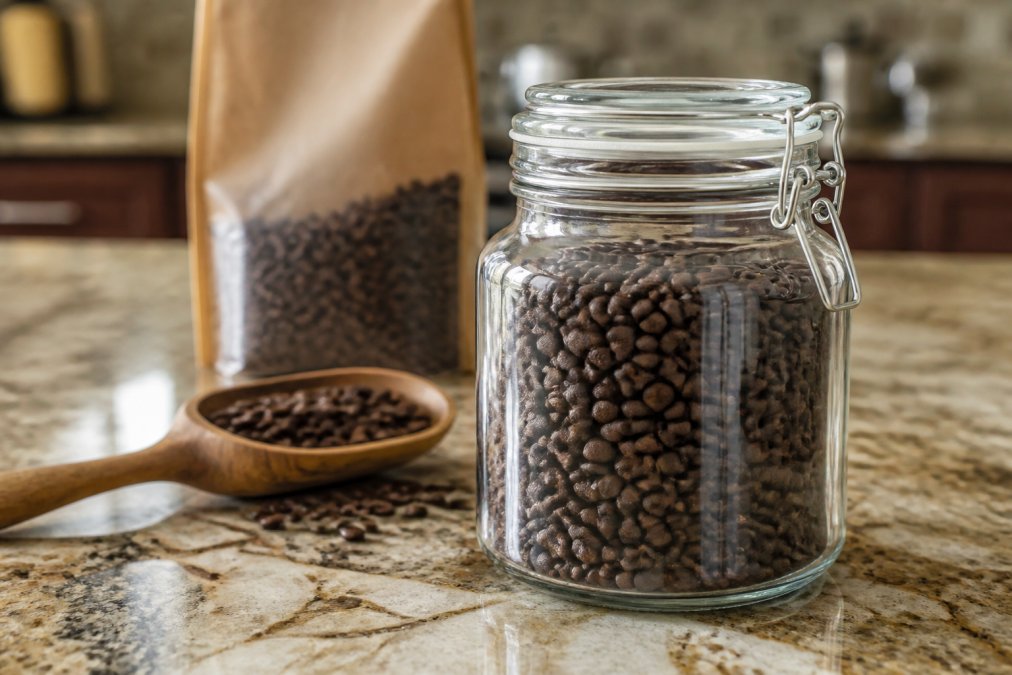
To store coffee beans for freshness, keep them in an airtight, opaque container at room temperature, away from light, heat, and moisture. Skip the fridge and freezer for daily-use beans.
The Cost per Cup of Better Coffee Beans
| Bag Size | Approx. Cups (10 g dose) | Cost per Cup at $12 | Cost per Cup at $20 | Cost per Cup at $28 |
|---|---|---|---|---|
| 12 oz (340 g) | ~34 | $0.35 | $0.59 | $0.82 |
| 1 lb (454 g) | ~45 | $0.27 | $0.44 | $0.62 |
| 2 lb (907 g) | ~90 | $0.13 | $0.22 | $0.31 |
Pricing for any specific bag depends on origin, roast, quantity, and whether it is a single origin or a blend, so check current prices directly. The framework above is what matters: dose, bag size, and how fast you finish the bag.
Decaf and Low-Acid Beans for Daily Drinking
Decaf and low-acid beans let daily drinkers enjoy coffee without the caffeine or the stomach discomfort. Decaf is processed to remove most caffeine while keeping flavor, and low-acid options suit sensitive stomachs.
Matching the Best Coffee Beans for Daily Drinking to Your Equipment
| Brewer | Best Bean Style | Roast Level | Grind Size | Typical Dose | Brew Time |
|---|---|---|---|---|---|
| Drip machine | Medium roast blend | Medium | Medium (~600-800 microns) | 10 g per 6 oz | 4-6 min |
| Pour over (V60, Chemex) | Single origin, washed | Light to medium | Medium-fine (~500-700 microns) | 15 g per 8 oz | 3-4 min |
| French press | Medium-dark blend | Medium-dark | Coarse (~900-1,100 microns) | 15 g per 8 oz | 4 min steep |
| AeroPress | Medium roast, any origin | Medium | Fine-medium (~400-600 microns) | 15 g per 6 oz | 1.5-2.5 min |
| Moka pot | Medium-dark, chocolatey | Medium-dark | Fine (~300-500 microns) | 15 g per 4 oz | 4-5 min |
| Espresso | Espresso blend | Medium to medium-dark | Fine (~200-400 microns) | 18 g per 36 g out | 25-30 sec |
| Cold brew | Dark roast blend | Dark | Coarse (~1,000-1,200 microns) | 100 g per 32 oz | 12-18 hrs |
| Super-automatic | Medium-dark blend | Medium-dark | Machine-set (usually fine-medium) | Machine-set | Machine-set |
At Al Di Là, beans are roasted to order for maximum flavor and aroma, and sealed to keep oxygen out. That freshness is the difference you taste.
Conclusion
The hardest part of better daily coffee is not choosing a bean. It is keeping it fresh long enough to enjoy it. Roast date, storage, and equipment matching decide most of the outcome.
Frequently Asked Questions
What makes a coffee bean good for daily drinking?
A bean works well for daily drinking when it is freshly roasted, medium roast, and balanced enough to enjoy without milk or sugar. Look for a visible roast date, whole bean form, and tasting notes that match your preference, such as chocolate, citrus, or nuttiness. Beans roasted within two to four weeks and stored in an airtight container keep their aroma and sweetness longer, so your everyday cup stays consistent.
How should I store coffee beans to keep them fresh for daily use?
Keep beans in an opaque, airtight container at room temperature, away from light, heat, and moisture. Do not refrigerate them; condensation damages the oils. For longer storage, freeze in a sealed bag and scoop out what you need without thawing the whole batch. Buying smaller amounts more often, such as through a subscription service, means you finish each bag while it is still at peak flavor.
Is it better to buy whole bean or pre-ground coffee for daily drinking?
Whole bean is better for daily drinking because grinding right before brewing preserves aroma and flavor. Pre-ground coffee loses volatile compounds within days, while whole beans stay fresh for weeks when stored properly. If convenience matters, buy whole bean and grind a few days' worth at a time, or choose a subscription that delivers freshly roasted beans on a schedule that matches your pace.
How can I tell if coffee beans are high quality?
Check the roast date first, then look for uniform color and size, a glossy but not oily surface on medium roasts, and a clear origin or blend description. Freshly roasted beans smell sweet and complex, not flat or papery. Avoid beans with no roast date, broken pieces, or a stale aroma. Specialty coffee labeled with a processing method, such as washed or natural, usually signals better traceability and flavor.