

Best Coffee Beans for Home Espresso Machines
Table of Contents
- What Makes a Good Espresso Bean
- Single Origin vs. Espresso Blends: Which Works Best
- How to Dial in Espresso Beans for Your Machine
- Espresso Roast vs. Regular Coffee: Understanding the Difference
- How to Store Espresso Beans and Maintain Freshness
- Arabica vs. Robusta: Bean Blends for Superior Extraction
- Roast Date and Freshness: Why Timing Matters for Espresso
- Frequently Asked Questions
Last Updated: September 25, 2026
What Makes a Good Espresso Bean
The best coffee beans for home espresso machines are freshly roasted, properly stored, and sourced from regions with the acidity and body needed for espresso extraction. They produce rich crema, balanced flavor, and smooth mouthfeel under pressure.
Unlike drip coffee, espresso demands precision because pressure extraction highlights every flaw. Stale beans produce thin, bitter shots; poor-quality beans yield muddy, unbalanced cups.
Three factors separate exceptional espresso beans: roast profile, freshness, and origin. A properly roasted bean brings out sweetness and reduces bitterness. Roast date matters because beans lose flavor compounds within days. Origin determines flavor notes, chocolate, caramel, fruit, or nuts.
The best coffee beans for home espresso machines are roasted to order, ensuring maximum freshness and aroma in every shot.
Single Origin vs. Espresso Blends: Which Works Best
Single origin beans showcase distinct flavor characteristics tied to their region. Espresso blends combine multiple origins to create balanced, consistent profiles designed for espresso extraction.
Single origin beans work best for experienced baristas exploring specific flavors. Ethiopian origins offer bright, fruity notes; Brazilian beans deliver chocolatey sweetness. They require more dialing in due to a narrower extraction window.
Espresso blends combine beans with different acidity levels, body, and sweetness to create forgiving, balanced shots. Most specialty machines perform best with well-crafted blends that support consistent crema and extraction.
The choice depends on your experience level. Beginners benefit from blends because they're more forgiving during the learning curve. Experienced users often prefer single origin for the complexity and the challenge of dialing in the perfect shot.
How to Dial in Espresso Beans for Your Machine
Dialing in adjusts grinder settings to achieve correct extraction time and yield. Most machines require 25-30 seconds and a 1:2 to 1:3 ratio. The process differs by roast profile and origin.
The Basic Dialing-In Process
Pull a test shot. If water runs through in under 20 seconds, grind finer. If it takes longer than 35 seconds, grind coarser. Goal: consistent shot timing around 25-30 seconds.
Proper extraction produces thick, caramel-colored crema. Thin crema signals under-extraction; dark, thin crema indicates over-extraction. Adjust tamping and grind size accordingly.
Let your machine warm up 10-15 minutes before pulling shots. Some machines benefit from a flush shot to stabilize temperature.
Troubleshooting by Roast Profile
Light roasts have denser structure and higher acidity, extracting slowly. If sour despite proper timing, grind finer and reduce dose to 18-19 grams. Light roasts benefit from slightly hotter water if your machine allows adjustment.
Dark roasts extract quickly; over-extraction (bitterness) is common. If bitter, grind coarser first. They dial in best at slightly lower temperatures. A 2-3 second reduction in shot time often improves dark roast espresso.
Medium roasts are the most forgiving and typically dial in with standard settings: 20-second grind-to-first-drops, 25-30 second total shot time, and standard machine temperature.
Troubleshooting by Origin and Acidity
High-acidity origins (Ethiopian, Kenyan, Central American) taste sour if under-extracted. Use a finer grind and longer shot time (28-32 seconds). If pressure drops, increase dose by 0.5 grams.
Low-acidity, heavy-bodied origins (Brazilian, Indonesian) taste flat if over-extracted. Use a coarser grind and shorter shot time (23-26 seconds).
The Real Skill
Real skill is understanding how grind, tamping, dose, and bean type work together. Keep notes on roast date, origin, grind setting, dose, and shot time. Pattern recognition, recognizing that all light roasts need finer grinds or high-acidity beans need more dose, separates competent baristas from exceptional ones.
Espresso Roast vs. Regular Coffee: Understanding the Difference
Espresso and regular coffee roasts are developed differently for their brewing methods. The label "espresso roast" is marketing shorthand; what matters is the roast profile and how beans were developed to handle pressure extraction.
Why Roast Profile Matters for Espresso
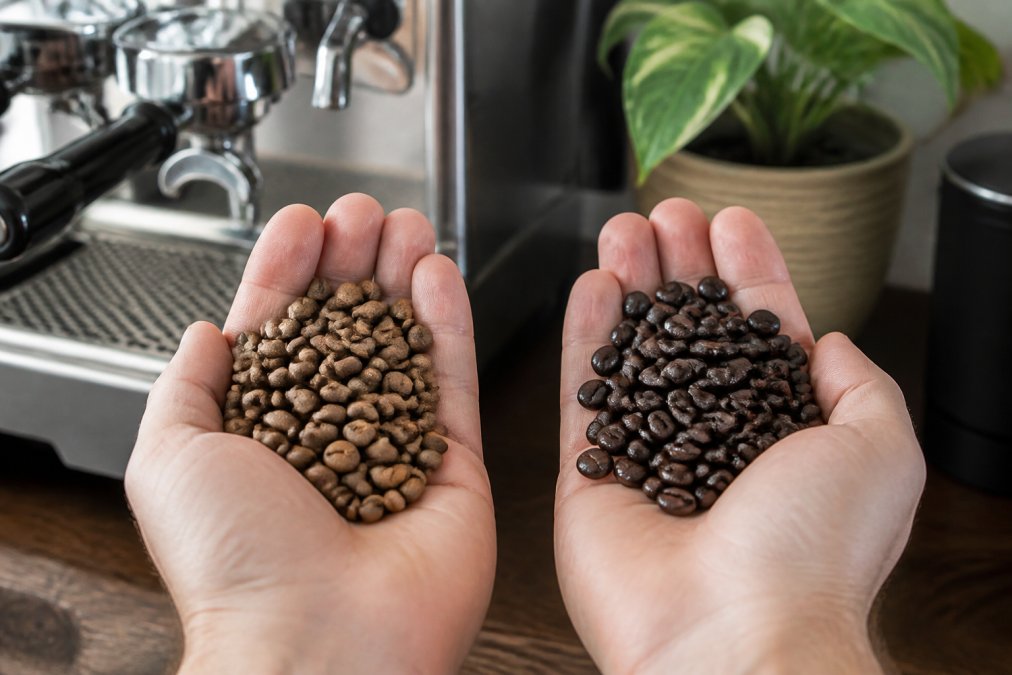
Espresso roast beans are roasted to medium-dark (410-430°F) to reduce acidity and increase body. Longer heat breaks down cellular structure, releasing oils and creating the heavy mouthfeel and crema that define espresso.
Drip roasts are lighter (390-410°F) because longer steeping extracts compounds naturally. Light roasts in espresso machines produce thin, sour shots due to under-extraction. Drip-designed medium roasts lack the body and oils espresso requires.
The Roast Development Window
A well-roasted espresso bean is separated from a poorly roasted one by the development phase, the final 1-2 minutes after first crack. The roaster controls heat and airflow to caramelize sugars and build body without burning.
A well-developed espresso roast has balanced acidity, sweetness, and body with thick, persistent crema. A poorly roasted bean tastes flat or bitter. Source from specialty roasters who publish roast dates and understand espresso extraction.
How to Identify a Properly Roasted Espresso Bean
Look beyond the label. A properly roasted espresso bean should have these characteristics:
- Roast date within 14 days: The roaster cares enough about freshness to print the date. If it's not on the bag, ask. Beans without a roast date are a red flag.
- Visible but not excessive oil: A light sheen on the beans indicates proper development. Beans that are slick with oil or appear dull have been over- or under-roasted.
- Consistent color: All beans in the bag should be a similar brown shade. Uneven coloring indicates inconsistent roasting.
- Origin and roast level listed: A reputable roaster specifies whether the beans are a single origin or blend, and describes the roast level (medium, medium-dark, dark). Vague descriptions like "espresso blend" without detail suggest the roaster isn't confident in their product.
- Flavor notes that match the origin: If the bag says "Brazilian espresso" and lists "chocolate and nuts," that's accurate to the origin. If it lists "bright citrus," that's a mismatch, Brazilian beans don't naturally produce citrus notes, and this suggests either mislabeling or a roasting error.
The Pressure Extraction Advantage
Espresso's 9-bar pressure extracts flavor compounds from beans in 25-30 seconds that would take 4-6 minutes in a drip brewer. This speed means the roast profile has to be optimized for rapid, complete extraction. A properly roasted espresso bean has been developed so that pressure can penetrate the bean structure quickly and evenly, pulling sweetness and body without pulling bitterness or sourness. A drip-coffee roast, by contrast, is designed to release flavor slowly over time, so when subjected to espresso pressure, it either under-extracts (sour) or over-extracts (bitter) depending on grind size.
The Bottom Line
The label "espresso roast" doesn't guarantee good espresso. What matters is the roast profile, how the beans were developed during roasting. A well-roasted espresso blend will have balanced acidity, sweetness, and body that shines under pressure. A poorly roasted one will taste flat or bitter regardless of the label. The best approach is to buy beans specifically roasted for espresso from roasters who publish roast dates, describe their roast level and development philosophy, and source from origins known to perform well in espresso (Brazil, Colombia, Ethiopia, Kenya, and specialty microlots from Central America are reliable starting points). Avoid pre-roasted beans from grocery stores, which may have been sitting for months and have lost the roast profile optimization that makes espresso extraction possible.
How to Store Espresso Beans and Maintain Freshness
Beans degas for 5-7 days after roasting. After that, oxidation accelerates flavor loss. Air, light, heat, and moisture are the enemy.
Store beans in an airtight, opaque container away from light and heat. A sealed bag with one-way valve works for up to 2 weeks. Avoid the freezer, which introduces moisture.
Whole beans stay fresh longer than ground coffee.
Arabica vs. Robusta: Bean Blends for Superior Extraction
Arabica beans are the premium choice for espresso. They offer complex flavor, balanced acidity, and natural sweetness. Arabica comprises roughly 60-70% of specialty espresso blends because the bean's inherent qualities support clean extraction and pleasant flavor.
Roast Date and Freshness: Why Timing Matters for Espresso
The roast date is the most important piece of information on a bag of espresso beans. Unlike regular coffee, which can taste acceptable weeks after roasting, espresso demands freshness because the pressure extraction amplifies staleness.
| Factor | Impact on Espresso | Priority Level |
|---|---|---|
| Roast date (within 14 days) | Crema quality, flavor clarity | Critical |
| Fresh grind (just before brewing) | Extraction consistency | Critical |
| Proper storage (sealed, cool, dark) | Flavor preservation | High |
| Bean origin (Arabica vs. Robusta) | Flavor profile and smoothness | High |
| Grind consistency | Shot timing and extraction | Critical |
| Machine calibration | Overall shot quality | High |
Frequently Asked Questions
Do I need special coffee beans for an espresso machine?
Not necessarily, but espresso-specific beans are optimized for extraction under high pressure. Regular coffee beans can work, but they may produce thin crema, bitter shots, or under-extracted flavor. Espresso beans are typically roasted darker to develop body and sweetness that complements the concentration process. For best results with your home machine, choose beans labeled for espresso or espresso blends.
What is the difference between espresso roast and regular coffee beans?
Espresso roasts are darker and developed longer to create deeper body, lower acidity, and richer sweetness that hold up under pressure extraction. Regular coffee beans are often lighter roasted to preserve origin flavors and acidity. Espresso roasts also have higher solubility, meaning more flavor compounds dissolve during the 25-30 second shot. The bean density and oil content differ too, affecting how they respond to tamping and pressure.
How should I store my espresso beans to maintain flavor?
Store beans in an airtight container away from light, heat, and moisture. Keep them at room temperature, refrigerators introduce condensation that damages flavor. Whole beans stay fresh 2-4 weeks from the roast date; grind just before brewing for maximum aroma and extraction clarity. Avoid clear containers; opaque jars with one-way valves protect beans during the degassing period after roasting while blocking oxygen and light exposure.
Does bean freshness impact espresso extraction?
Absolutely. Fresh beans, within 2-3 weeks of the roast date, produce better crema, clearer flavor notes, and more consistent extraction. Stale beans lose CO₂ and become less soluble, leading to under-extraction and flat shots. Freshness affects how beans respond to tamping pressure and water flow. Roasted-to-order beans ensure optimal flavor and mouthfeel during the critical brewing window.