

Why Your Coffee Tastes Bitter: Fixes That Work
Table of Contents
- Why Coffee Tastes Bitter: The Main Culprits
- How to Fix Bitter Coffee: A Troubleshooting Guide
- Coffee Grind Size for Less Bitterness
- Adjust Your Coffee-to-Water Ratio
- How to Clean a Coffee Maker to Remove Bitter Residue
- Brew Time, Water Temperature, and Bean Freshness
- When Bitterness Is Normal: Roast Level and Flavor Profile
- Conclusion
- Frequently Asked Questions
Last Updated: October 21, 2026
Why Coffee Tastes Bitter: The Main Culprits
Bitter coffee is almost always a brewing problem, not a bean problem, and the fix is straightforward.
Over-extraction as the primary cause
Over-extraction is the leading reason your coffee tastes bitter: hot water pulls too many compounds from the grounds, and longer contact dissolves more harsh flavors into your cup.
Common over-extraction culprits:
- Grind too fine (more surface area = faster extraction)
- Brew time too long (French press left sitting, drip coffee forgotten)
- Water temperature too hot (speeds up extraction)
- Too much coffee relative to water (concentrated extraction)
Distinguishing bitterness from sourness and astringency
Diagnose correctly before fixing: bitterness, sourness, and astringency feel different on your palate.
Bitterness tastes sharp and harsh, coats your mouth, lingers, and shows up at the back of your throat.
Sourness feels tangy and acidic, like lemon or vinegar, hitting the sides of your tongue, usually under-extraction.
Astringency creates a dry, puckering sensation like strong tea or red wine, often signaling a dark roast or contact time that's too long.
How to Fix Bitter Coffee: A Troubleshooting Guide
The fastest way to eliminate bitterness is to test one variable at a time: change one thing, brew, taste, then decide your next move.
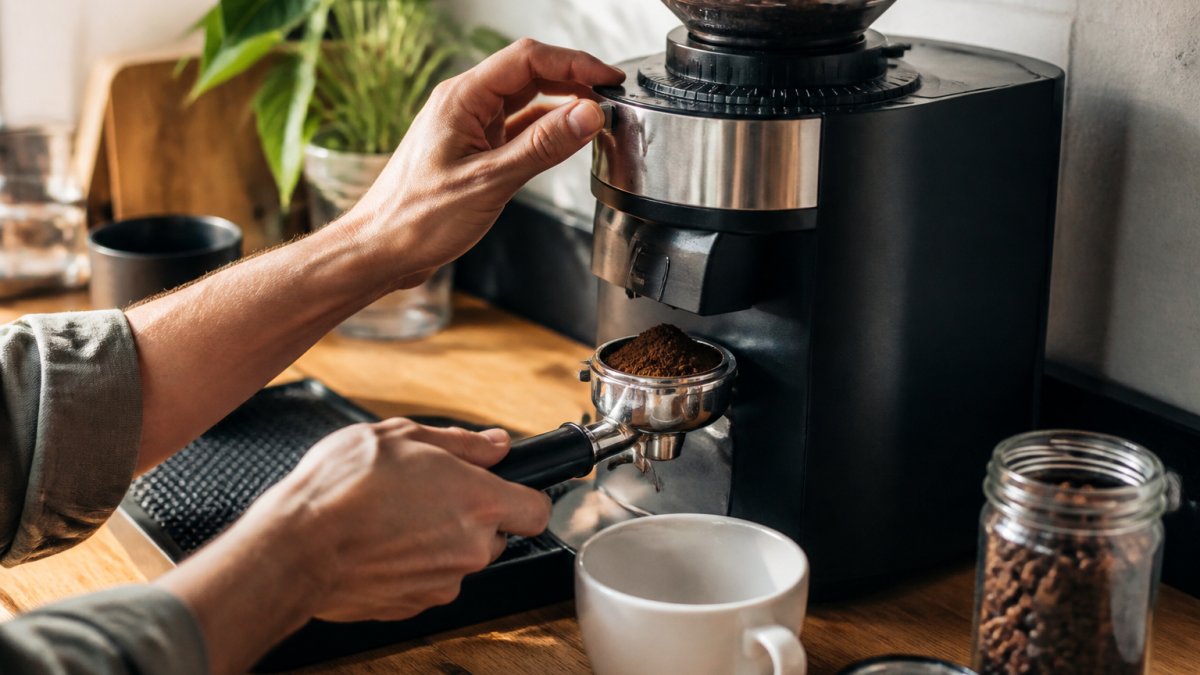
Step 1: Diagnose your brewing method
Each brewing method has its own sweet spot for grind, water temperature, and contact time.
Pour-over gives you more control: medium-fine grind, water poured over 2-4 minutes. Bitterness here usually means pouring too slowly or grinding too fine.
French press steeps 4 minutes with coarse grounds; bitterness signals contact time too long, so try 3.5 minutes or a coarser grind.
Espresso pushes hot water through grounds under pressure for 25-30 seconds; bitterness means over-extraction from too-fine grounds or too much coffee tamped into the basket.
Step 2: Test one variable at a time
Change only one thing between brews to see what moved the needle.
- Adjust grind size first. Make it coarser and brew again. Coarser grounds extract more slowly, which often eliminates bitterness.
- If that doesn't work, reduce brew time. Pull your pour-over off the heat 30 seconds earlier. Stop your French press at 3.5 minutes instead of 4. Shorter contact means less bitter extraction.
- Check water temperature. Hotter water extracts faster. If you're using boiling water, try letting it cool for 30 seconds before brewing.
- Lower your coffee-to-water ratio. Use less coffee, more water. This dilutes the concentration of bitter compounds.
Keep notes on each change and its taste; after three or four adjustments, you'll find your method's sweet spot.
Coffee Grind Size for Less Bitterness
Grind size is the single most powerful lever over bitterness: it controls how much surface area the water reaches and how fast compounds dissolve.
Why fine particles cause over-extraction
Halve the particle size and you roughly quadruple the surface area for extraction.
Uneven grinding and the fines problem
Even a good burr grinder produces some fines; three things increase them:
- A dull or worn burr set. Burrs that have lost their edge crush and shatter beans instead of slicing them cleanly, producing more dust. Most home burr grinders benefit from a burr replacement after a few hundred pounds of coffee, though the interval depends heavily on use.
- Grinding too fine for the method. The finer the setting, the more fines you generate as a byproduct.
- Dark, brittle beans. Dark roasts are more fragile and shatter into fines more readily than dense light roasts at the same setting.
If your coffee tastes bitter no matter how you adjust brew time, fines are a likely suspect.
Burr vs. blade: what actually changes in the cup
A burr grinder crushes beans between two surfaces set to a fixed gap, producing a narrow particle-size distribution; a blade grinder chops randomly, producing a wide one.
Entry-level electric burr grinders commonly run $30-$100, and hand burr grinders can cost less.
Choosing a starting grind by method
Use these as starting points, then adjust one notch at a time:
- Drip: medium, roughly the texture of table salt.
- Pour-over: medium-fine, closer to fine sand.
- French press: coarse, like sea salt or coarse cornmeal.
- Espresso: fine, like powdered sugar, but tuned to your basket and dose.
- Cold brew: coarse, similar to French press.
Finger test: rub a pinch between thumb and forefinger. Distinct grains are right; powder is likely too fine for anything but espresso.
The adjustment rule
Change grind in small steps, one notch on a stepped grinder, a small turn on a stepless one, and re-brew with everything else identical.
Adjust Your Coffee-to-Water Ratio
The coffee-to-water ratio sets how concentrated your extraction is: too much coffee pushes toward over-extraction and a bitter, heavy cup; too little leaves it weak and sour. Start from a measurable ratio and move in small, recorded steps.
Measurable starting points
Ratios are expressed as coffee : water by weight, because weight is far more consistent than volume. Common starting points:
- Drip and pour-over: 1:16 to 1:17. For a 12-ounce (about 355 ml) cup, that is roughly 20-22 grams of coffee.
- French press: 1:15 to 1:16 for a fuller body; 1:17 for a lighter cup.
- Espresso: a brew ratio of about 1:2 (coffee to yield) is a common starting point, then adjusted to taste.
- Cold brew: concentrate is often brewed around 1:5 to 1:8 and diluted to taste before drinking.
Without a scale, a level tablespoon of medium-ground coffee is roughly 5-6 grams, close enough to start, but a $15-$25 kitchen scale removes the guesswork.
Adjusting for bitterness
If your coffee tastes bitter, move the ratio toward more water per unit of coffee, for example, from 1:16 to 1:17, while holding grind, temperature, and brew time constant.
Why weight beats scoops
Volume measurements drift with grind size, bean density, and packing, two "tablespoons" can differ by several grams, masking whether your change worked. Weighing makes each test repeatable.
Record what works
Note the ratio, grind setting, temperature, and brew time for each cup you like; once dialed in, keep the ratio fixed and adjust other variables.
How to Clean a Coffee Maker to Remove Bitter Residue
Old coffee residue and oils build up inside your machine, tasting bitter and stale and contaminating every cup. Clean it weekly if you use it daily.
For drip coffee makers: empty the grounds and filter, rinse the basket and carafe with hot water, then run a water-only brew cycle to flush out old oils.
For French press: empty the grounds, rinse the glass, then fill with hot water, let sit 2 minutes, and empty; repeat twice. Old grounds stick to the glass and metal mesh and taste bitter.
For pour-over cones: rinse immediately after brewing, since dried residue hardens and affects future brews.
Once a month, deep clean with a solution of equal parts white vinegar and water, run it through your machine as if brewing, then run two full cycles of plain water to rinse out the vinegar. This removes mineral buildup and old oils that regular rinsing misses.
Brew Time, Water Temperature, and Bean Freshness
Contact time and extraction balance
Contact time is how long hot water touches the grounds; longer contact pulls out more compounds, good and bitter alike.
Pour-over gives you direct control: pour slowly over 2-3 minutes for a balanced cup.
French press steeps 4 minutes by design. If it tastes bitter, reduce to 3.5 minutes or use a coarser grind to slow extraction.
Water temperature and soluble compounds
Water temperature controls extraction speed: hotter water extracts faster, cooler water slower.
Cold brew uses room-temperature or cold water and steeps for 12-24 hours.
Freshly ground beans and roast level
Fresh beans taste better and extract more predictably. Beans lose flavor within 2-3 weeks of roasting. After a month, they taste stale and flat.
Buy beans roasted within the last week if possible. Grind them just before brewing, ground coffee loses flavor within 15 minutes of grinding.
Roast level affects flavor. Light roasts taste bright and acidic. Medium roasts taste balanced. Dark roasts taste bold and sometimes bitter by design.
If you're drinking dark roast and it tastes bitter, that might be the roast profile, not a brewing mistake. At Al Di Là, we roast beans to order and offer medium roasts like our Breakfast Blend and Brazil Santos, which deliver smooth, balanced flavor without harsh bitterness.

When Bitterness Is Normal: Roast Level and Flavor Profile
Some bitterness is intentional. Dark roasts are roasted longer, developing bold, sometimes bitter flavors, not a flaw, but the roast style, and in dark roast espresso or French press that bitterness is part of the profile.
If you don't like that bitterness, switch to a medium or light roast. Medium roasts like our Brazil Santos offer smooth, cocoa-forward flavors with minimal harshness; light roasts taste bright and fruity. The roast level you choose is personal preference, experiment and see which one you enjoy. Your taste buds are the only measure that matters.

Conclusion
Bitter coffee comes from over-extraction, and over-extraction comes from one of four sources: grind too fine, brew time too long, water too hot, or too much coffee. Start by making the grind coarser; if that doesn't work, reduce brew time by 30 seconds. Test one change at a time, taste, and adjust again.
Clean your coffee maker weekly to remove old oils and residue that contribute to bitterness. Use fresh beans roasted within the last two weeks, and grind them just before brewing.
If you've dialed in your brewing method and bitterness persists, the beans might be the issue. Stale or low-quality beans taste harsh no matter how well you brew them. At Al Di Là, we roast beans to order and ship them fresh, ensuring maximum flavor and aroma in every cup.
Frequently Asked Questions
What causes bitter coffee, and how do I know if my coffee is over-extracted?
Over-extraction is the primary cause of bitter coffee. It happens when hot water pulls too many soluble compounds and harsh compounds from the grounds, creating a dry aftertaste. Over-extracted coffee tastes harsh and unpleasant. You can distinguish this from sourness (a tangy bite) or astringency (a puckering sensation). If your coffee tastes unpleasantly harsh and flat, over-extraction is likely the culprit. Start by reducing your brew time or using a coarser grind.
How does coffee grind size affect bitterness?
Fine grind particles increase surface area, allowing more contact time with hot water and faster extraction. A grind that is too fine causes over-extraction and bitterness. For drip coffee, use a medium grind; for French press, use a coarse grind. A burr grinder gives you consistent, uneven-free particles. If your coffee tastes bitter, try grinding coarser and brewing again, this single adjustment fixes bitterness in most cases.
What coffee-to-water ratio should I use to reduce bitterness?
A standard coffee-to-water ratio is 1:16 (one part coffee to sixteen parts water). Start with this baseline. If your coffee tastes over-extracted and bitter, use slightly less coffee or more water to dilute the brew strength. Measure by weight for accuracy: 30 grams of coffee grounds to 480 grams of water is a reliable starting point. Adjust from there based on taste. Reducing the coffee dose while keeping brew time the same lowers extraction and reduces bitterness.
Can cleaning my coffee maker actually reduce bitter taste?
Yes. Old residue and coffee oils left in your brewing equipment build up over time and contribute to a bitter, stale taste. Clean your coffee maker weekly with hot water and, monthly, with a descaling solution to remove mineral buildup. For French press, rinse the metal filter thoroughly after each use. For drip machines, run water through the filter basket without grounds. A clean machine extracts flavor more evenly and removes the harsh compounds that linger from previous brews.