

Freshly Roasted Coffee Beans for Sale: A Buyer's Guide
Table of Contents
- What Makes Freshly Roasted Coffee Beans Different
- Understanding Roast Profiles and Single-Origin Selection
- How to Tell If Coffee Beans Are Fresh
- How to Store Coffee Beans for Maximum Freshness
- Coffee Subscription Services: Convenience and Freshness Combined
- Whole Bean vs. Ground: Which Format Preserves Freshness
- Why Small-Batch Roasting and Sourcing Matter
- Shipping, Delivery, and Your Freshness Guarantee
- Frequently Asked Questions
Last Updated: September 27, 2026
What Makes Freshly Roasted Coffee Beans Different
When you open a bag of freshly roasted coffee beans, you're not just buying coffee, you're capturing a moment in time. The difference between beans roasted yesterday and beans roasted three weeks ago is the difference between tasting the origin and tasting stale air.
Freshness in coffee isn't marketing language. It's chemistry. The moment beans leave the roaster, they begin to oxidize. Oils that carry flavor compounds break down. Aromatics escape. What you're left with is a flat, muted version of what the roaster intended.
This is where roast date transparency matters. A visible roast date tells you exactly what you're getting. It's the single most reliable indicator of whether those beans will deliver the rich, complex cup you paid for, or whether you're buying yesterday's promise.
Roast Date Transparency and Flavor Impact
The roast date is your contract with quality. Unlike the "best by" dates stamped on mass-produced coffee that may have been roasted months earlier, a clear roast date lets you know precisely how fresh your beans are.
Most specialty roasters print the roast date directly on the bag. Al Di Là includes it prominently because freshness is non-negotiable.
The flavor impact is immediate. Fresh beans produce a brighter cup with more complexity. You'll taste the notes the roaster highlighted, the citrus in an Ethiopian, the chocolate in a Brazilian. Older beans flatten into a one-dimensional bitterness.
Roasted-to-Order vs. Pre-Roasted Alternatives
Here's where the model matters. Pre-roasted coffee sitting in a warehouse or on a grocery shelf has already lost weeks of its prime window. By the time it reaches your kitchen, it's already compromised.
Roasted-to-order changes everything. Your beans are roasted only after you order them. They ship fresh, arriving at your door at peak flavor. This is the model Al Di Là uses, beans roasted to order ensure maximum freshness and aroma.
The trade-off is timing. Roasted-to-order takes longer than grabbing pre-roasted stock off a shelf. But the flavor difference justifies the wait. You're choosing between convenience and quality. Most coffee enthusiasts choose quality.
Understanding Roast Profiles and Single-Origin Selection
Coffee's flavor profile is shaped by two decisions: how dark the roast is and where the beans originated. Understanding both helps you find the cup that matches your preferences.
Light, Medium, and Dark Roast Profiles
Light roasts preserve the most origin character. They're roasted to first crack, that audible snap inside the roaster when the bean's internal pressure releases. Light roasts taste bright and acidic, with pronounced flavor notes that reflect the bean's altitude, processing method, and terroir.
Medium roasts balance origin character with roasted flavors. The beans are pulled shortly after first crack, developing some caramelized sweetness while retaining origin complexity. Most coffee drinkers find medium roasts most approachable, they're neither too sharp nor too heavy.
Dark roasts emphasize roasted flavors over origin character. Beans are roasted past second crack, developing deep chocolate, caramel, and sometimes smoky notes. The roasting process becomes the dominant flavor. If you prefer a bolder, less acidic cup, dark roasts deliver.
The best roast profile depends on your brewing method and taste preference, not on what's "supposed" to be best. French press users often prefer darker roasts because the immersion brewing method highlights those bold roasted notes. Pour-over enthusiasts frequently choose light to medium roasts to showcase origin complexity.
Single-Origin vs. Signature Blends
A single-origin coffee comes from one specific region, sometimes even one specific farm. It offers clarity. You taste exactly what that place, that altitude, that harvest produced. Single-origins are the way to explore coffee's diversity.
Signature blends combine beans from multiple origins. A roaster might blend an Ethiopian with a Colombian to create a profile that's more balanced than either bean alone. Blends offer consistency and complexity that single-origins sometimes can't match.
Neither is objectively better. Single-origins satisfy curiosity and adventure. Blends satisfy the desire for a perfect, repeatable cup. Al Di Là offers both.
How to Tell If Coffee Beans Are Fresh
Freshness leaves visible and aromatic clues. Learn to read them, and you'll never buy stale coffee again.
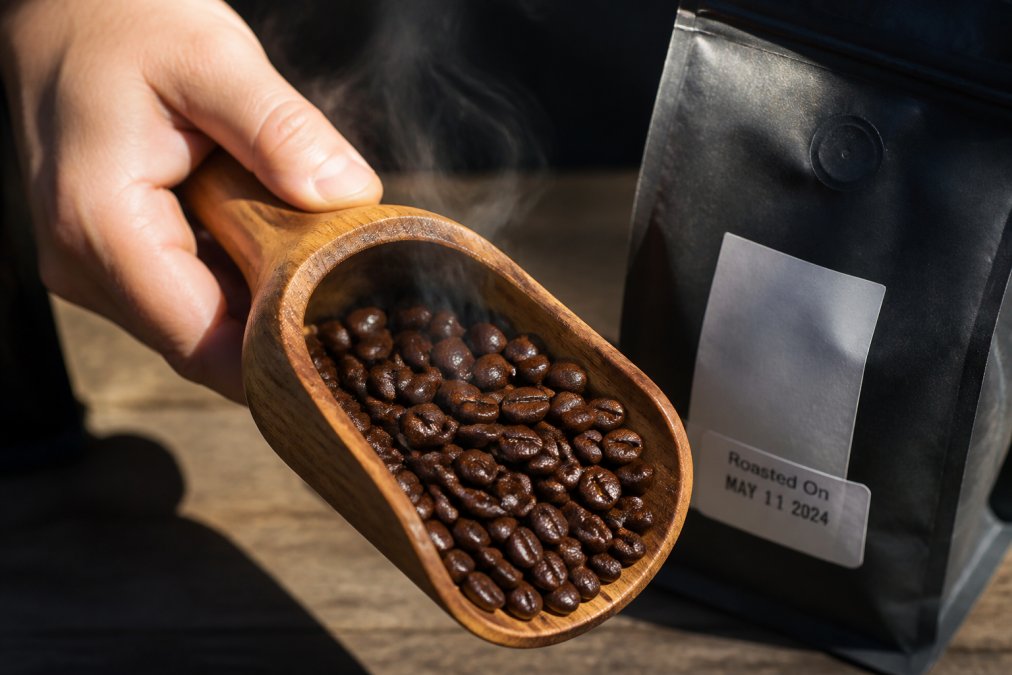
Visual and Aromatic Indicators
Fresh beans have a rich, dark color with visible surface oils. The oils aren't a defect, they're a sign the beans haven't oxidized. They carry flavor and aroma.
When you open a fresh bag, you should smell coffee immediately. The aroma should be strong and complex, not faint or flat. Hold a bean close to your nose. Fresh beans produce a sharp, inviting scent. Stale beans smell muted or dusty.
Look at the bean's surface. Fresh beans appear slightly wet or glossy, especially in darker roasts. This sheen comes from the oils released during roasting.
The Role of Degassing and Harvest Date
After roasting, beans release carbon dioxide, a process called degassing. This happens over several days. Beans that are too fresh (roasted less than 24 hours ago) will release so much CO2 during brewing that extraction suffers. Beans roasted 5-7 days ago have degassed enough for optimal brewing.
How to Store Coffee Beans for Maximum Freshness
Storage determines how long your beans stay fresh. Poor storage accelerates staleness. The right approach keeps beans vibrant for weeks.
Optimal Storage Conditions and Container Selection
Coffee's enemies are light, heat, moisture, and air. Store beans in a cool, dark place, ideally between 60-70°F. A pantry works better than a kitchen counter. Never store beans in the refrigerator or freezer; temperature fluctuations cause condensation that damages the beans.
Shelf Life and When to Use Your Beans
Freshly roasted beans peak between one and four weeks after roasting. They're excellent for the first two weeks and still good through week four. After 30 days, flavor degradation becomes noticeable.
Coffee Subscription Services: Convenience and Freshness Combined
Subscriptions solve the freshness problem by automating delivery. You get fresh beans on a predictable schedule without having to remember to order.
Subscription Models and Delivery Frequency
Most coffee subscriptions let you choose your delivery frequency, weekly, biweekly, or monthly. The best model matches your consumption rate. If you drink two cups daily, a biweekly delivery of 12 ounces keeps you in the optimal freshness window.
Pausing, Skipping, and Flexibility
A subscription should never feel like a trap. The best models let you pause without penalty, skip a month when you're overstocked, or cancel anytime.
Whole Bean vs. Ground: Which Format Preserves Freshness
The format you choose affects how long your coffee stays fresh. Whole beans always win for longevity.
Why Small-Batch Roasting and Sourcing Matter
Scale changes everything in coffee. Small-batch roasting and careful sourcing produce coffee that industrial operations simply cannot match.
Direct Trade and Sustainable Sourcing
Direct trade relationships mean roasters buy beans directly from farmers, cutting out middlemen. The farmer gets paid fairly. The roaster gets beans with complete traceability. You get coffee with a story and integrity behind it.
Bean Density, Processing Methods, and Flavor Extraction
Bean density affects how water extracts flavor during brewing. High-altitude beans are denser, they grew slowly in cool conditions, developing more complex sugars and compounds. These beans extract more slowly and reveal more layers of flavor.
Shipping, Delivery, and Your Freshness Guarantee
How coffee reaches you determines whether you're getting fresh beans or old stock.
Fast shipping is non-negotiable.
Look for roasters that offer a freshness guarantee.
Frequently Asked Questions
What is the benefit of buying coffee roasted-to-order?
Roasted-to-order coffee reaches peak flavor within 24-48 hours of roasting and maintains that quality for weeks when stored properly. Unlike pre-roasted beans that may sit in warehouses for months, roasted-to-order ensures you receive beans at their optimal freshness. This method preserves the complex flavor notes, aroma, and body that specialty coffee enthusiasts value. You also get transparency about your bean's harvest date and processing method, which directly affects taste and extraction quality in your cup.
How long do freshly roasted coffee beans stay fresh?
Freshly roasted beans remain at peak quality for 2-4 weeks when stored in an airtight container away from heat, light, and moisture. The degassing process (where CO2 escapes after roasting) continues for several days, and beans are actually ideal for brewing 5-7 days after roasting once degassing is complete. After 4 weeks, beans gradually lose their aromatic complexity and bright acidity, though they remain drinkable for up to 2 months. Whole beans last longer than ground coffee because grinding increases surface area and accelerates flavor loss.
How do coffee subscription services work, and can I pause without penalties?
Coffee subscription services deliver freshly roasted beans on a schedule you choose, typically every 2, 3, or 4 weeks. Most reputable services allow you to pause, skip, or adjust your delivery frequency. You maintain full control through your account dashboard. Some services also let you customize bean selection, roast profile, or grind size with each shipment. Always review the terms, but premium subscription models prioritize customer flexibility because they focus on long-term satisfaction rather than trapping subscribers.
Can I taste the difference between freshly roasted beans and mass-produced coffee?
Yes, most people notice a significant difference in aroma, brightness, and complexity within the first sip. Freshly roasted beans deliver vibrant flavor notes (citrus, chocolate, nuts, florals) that fade in stale coffee. The body feels fuller, the acidity is cleaner, and the aftertaste is pleasant rather than bitter. You don't need to be an expert to perceive this, it's similar to tasting fresh bread versus day-old bread. If you've only experienced mass-produced or instant coffee, the jump to freshly roasted single-origin or signature blend beans is particularly noticeable. Your brewing method and grind size matter too; proper extraction amplifies what fresh beans deliver.