

How to Compare Premium Coffee Cost Per Cup vs Cafe Prices
Last Updated: November 1, 2026
Quick Summary
Compare the cost per cup by adding up all home costs, including beans, filters, milk, energy, waste and equipment spread over the cups you brew, then matching that against a cafe drink of the same size and milk. Use break-even math to see how long equipment takes to pay for itself. Capsules cost more per cup but can be cheaper in bulk.
- Match the drink size and milk choice exactly when comparing home and cafe prices.
- Spread equipment cost across the total cups you expect to brew, not cups per day.
- Break-even cups equal equipment price divided by the savings per cup versus a cafe.
- The 60-pack of capsules costs about $1.00 per capsule, versus about $2.00 for the 12-pack.
- Add tax, milk surcharges and size differences to every cafe price before comparing.
Table of Contents
- What Premium Coffee Really Costs Per Cup at Home
- Cost of Coffee Beans Per Cup: Working Out Your Real Number
- Home Brewed Coffee Cost Per Cup Including Equipment and Break-Even
- Coffee Shop Coffee Prices for Comparable Drinks
- Cost of Coffee Pods Per Cup and How Capsules Compare
- Non-Price Value: Freshness, Convenience and Ritual
- Booking Your Own Cost Comparison and Choosing a Setup
- Frequently Asked Questions
What Premium Coffee Really Costs Per Cup at Home
Comparing the cost per cup of premium coffee against a café is harder than it looks. Most people compare a $5 latte with a bag of beans and call it a day. That skips equipment, waste, milk, and the time spent brewing. A fair comparison needs a consistent drink size, a consistent quality level, and every recurring expense included.
Al Di Là sells its coffee in several formats, including blends and single-serve capsules. Each format lands at a different cost per cup, so the first step is to pick the format you actually use and price that one.
Watch out: the cheapest per-cup option is not always the best value once you factor in freshness and how many cups you drink in a week.
Cost of Coffee Beans Per Cup: Working Out Your Real Number
Bean cost starts with the price per bag and the dose per cup. Most home brewers use roughly 15 to 20 grams of coffee for a single 8-ounce cup, though the right amount depends on your method and taste. Divide the bag price by the total grams to get a cost per gram, then multiply by your dose.
Al Di Là's House Blend and Breakfast Blend are each priced at $24.99. Its signature blend is also sold in capsule form, so bean and pod costs can be compared directly once you know the bag size and grams per cup.
A common mistake is ignoring waste. Beans left in the hopper, or grounds you discard after a bad brew, raise the real cost of each cup.
Home Brewed Coffee Cost Per Cup Including Equipment and Break-Even
Equipment is the cost most comparisons leave out, and recurring costs are the second most common omission. A transparent home cost per cup has two layers: a one-time equipment layer spread across every cup you will brew, and a recurring layer that includes beans, filters, milk, energy, and waste.
Layer 1: equipment amortization. Divide the equipment price by the number of cups you expect to brew over its useful life, not by cups per day. A $150 grinder used for 1,000 cups costs $0.15 per cup. A $600 espresso machine used for 3,000 drinks costs $0.20 per drink. If you upgrade or replace equipment, restart the math with the new price and a realistic cup count.
Layer 2: recurring costs. Build the per-cup number from these line items:
- Beans: bag price divided by total grams, multiplied by your dose. At 18 grams per 8-ounce cup, a 12-ounce bag yields roughly 19 cups.
- Filters: paper filters run a few cents each; a reusable metal or cloth filter spreads its price across many brews.
- Milk: for milk drinks, add the cost of the milk volume you actually pour, including any plant-based milk, which is usually priced higher per ounce than dairy.
- Energy: a drip brewer or kettle draws modest electricity per brew; an espresso machine with a heating element draws more. The per-cup energy cost is small but real, and it belongs in the model if you want an honest number.
- Waste: beans left in the hopper, a bad grind you discard, or a spoiled half-bag all raise the real cost per cup. A common pattern is 5 to 10 percent waste on whole-bean coffee; build that into your dose math rather than ignoring it.
Break-even, done properly. Break-even is the number of cups it takes for the savings per cup to recover the equipment price:
Break-even cups = equipment price ÷ (cafe price per drink − home cost per drink)
Worked example with round numbers: equipment costs $150. A matched cafe drink costs $5.00 out the door. The home version of the same drink costs $1.50 per cup including beans, filter, milk, energy, and amortized equipment. Savings per cup is $3.50. Break-even is $150 ÷ $3.50 ≈ 43 cups. At three cups a day, that is about two weeks.
Run the same formula for a more expensive setup. A $600 espresso machine with a home cost of $2.00 per milk drink against a $6.00 cafe latte saves $4.00 per drink, so break-even is 150 drinks. At one latte a day, that is about five months. The pattern to notice: the bigger the per-cup gap and the more cups you drink, the faster equipment pays for itself, and the more the equipment price stops mattering in the long run.
Al Di Là does not sell brewing equipment in the product catalog, so use your existing machine or grinder in this calculation. If you are deciding whether to buy new gear, plug the price into the break-even formula above and compare the result against how many cups you realistically brew in a month.
The article's worked example shows how the home and cafe numbers compare once equipment is included.
12 Pack Single Serve Coffee Capsules →
| Item | Value | Note |
|---|---|---|
| Equipment price (example) | $150 | Grinder used for 1,000 cups |
| Cafe price per drink | $5.00 | Matched drink, out the door |
| Home cost per drink | $1.50 | Includes beans, filter, milk, energy, amortized equipment |
| Savings per cup | $3.50 | Cafe price minus home cost |
| Break-even | About 43 cups | Equipment price divided by savings per cup |
Coffee Shop Coffee Prices for Comparable Drinks
Cafe prices are the other half of the comparison, and they are the half most home-cost articles hand-wave. To make the numbers honest, anchor every cafe price to a specific drink, size, and milk choice, then note what the menu price does and does not include.
A workable like-for-like pairing looks like this:
- Drip coffee: compare an 8-ounce or 12-ounce drip against an 8-ounce or 12-ounce home brew from the same premium beans. Drip is the closest cafe analog to a standard home brewer.
- Espresso and milk drinks: compare a 12-ounce latte or cappuccino against a home espresso drink built from the same beans and the same milk volume. A 16-ounce oat-milk latte is not a fair stand-in for an 8-ounce black coffee.
- Cold brew: compare a 12-ounce or 16-ounce cold brew against a home batch made at the same concentrate-to-water ratio. Cold brew uses more grounds per ounce, so the home cost per cup is higher than drip.
When you read a menu price, check three things before you write it down:
- Tax. Menu prices may not include sales tax, which varies by location, so add your local rate to get the out-the-door number.
- Milk and syrup surcharges. Plant-based milk and flavor syrups often carry an upcharge that is not on the base price. A latte with oat milk can cost meaningfully more than the posted latte price.
- Size. A "large" is not standardized. Record the ounce size next to the price so you can match it to your home serving.
A common pattern is that a plain drip coffee is the cheapest cafe drink per ounce, while milk-based espresso drinks carry the widest gap versus home brewing because you are paying for milk, labor, and equipment time in every cup. That gap is where the home-versus-cafe savings are largest, and it is also where the comparison is easiest to get wrong if you match a small home brew against a large cafe latte.
Once you have a matched cafe price, subtract the home cost per cup for the same drink and size. Multiply the difference by how many of those drinks you buy in a month, then by twelve, to see the annual gap. Keep the receipt log and revisit it quarterly, because a cafe price increase quietly widens the savings from brewing at home.
Cost of Coffee Pods Per Cup and How Capsules Compare
Single-serve capsules trade a higher cost per cup for convenience. Al Di Là's 12-pack of Single Serve Coffee Capsules is priced at $23.99, which works out to about $2.00 per capsule. The 60-pack costs $59.99, or about $1.00 per capsule.


Each capsule is sealed with no oxygen inside, which keeps the coffee fresh. The filter design is also improved to absorb more grounds without slowing the brew.
If you drink one capsule a day, the 60-pack lasts about two months. The larger pack roughly halves the per-cup cost compared with the 12-pack, so it is the better value if you use capsules regularly.
Non-Price Value: Freshness, Convenience and Ritual
Price is only part of the decision. Freshness affects taste, and taste affects how many cups you enjoy. Al Di Là roasts to order, which helps keep the coffee fresh.
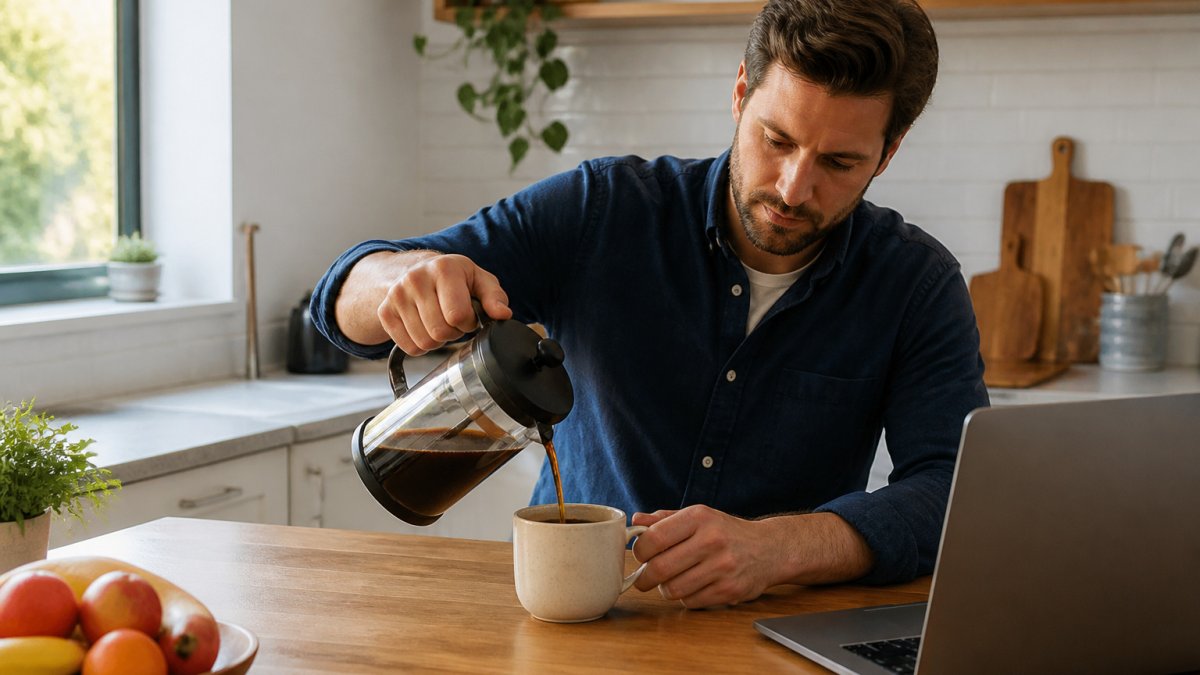
Convenience matters too. A capsule takes seconds, while a pour-over takes several minutes and more cleanup. Many people also value the daily ritual of making their own coffee, which a café visit replaces with a shorter, more routine transaction.
!A remote professional at a kitchen counter pouring fresh coffee from a French press into a ceramic mug beside a laptop in morning light
Booking Your Own Cost Comparison and Choosing a Setup
Start with the format you use most. Write down your cups per week, the price you pay now, and the price per cup for each option. Add equipment and waste if you brew at home. Then run the break-even calculation for any new equipment you are considering.
If you want a single number to decide, compare your current monthly café spend against the monthly cost of the setup you are considering. Include the equipment payback period.
For most people who drink several cups a week, a bean subscription or bulk capsule pack lowers the per-cup cost while keeping the coffee fresh. Browse the 60-pack capsules or the House Blend to see which fits your routine, and keep the numbers from your own calculation as the final guide.
Frequently Asked Questions
How much does a premium cup of coffee cost at home compared with a cafe?
A cup brewed at home from premium whole beans typically costs less per cup than a comparable cafe drink, because the beans are the largest recurring expense and the cafe adds labor, rent and cup costs. The exact gap depends on the dose you use, the drink size and whether you count equipment. To compare fairly, match the drink (for example, a 12-ounce brewed coffee) and add a share of your equipment cost over its expected life. Your own calculation is more reliable than any average.
How much do coffee pods cost per cup?
Single-serve capsules usually cost more per cup than brewing ground or whole-bean coffee, because you pay for the packaging and the convenience of each portion. Al Di La's 12 Pack Single Serve Coffee Capsules start at $23.99 and the 60 Pack starts at $59.99, so divide the price by the number of capsules to get your per-cup figure. Compare that number against the cost of the same blend brewed from a bag to see the convenience premium.
Does buying freshly roasted coffee beans save money compared with cafe coffee?
Buying whole beans and brewing at home usually costs less per cup than buying the same drink at a cafe, especially if you drink more than one cup a day. Savings depend on the bean price you pay, the dose per cup and the equipment you already own. Freshly roasted beans can also mean more flavor per gram, so some people brew slightly less coffee and still get a full cup. Track your own cost per cup for a month to confirm the savings for your habits.
