

Roasted to Order Coffee Benefits: Freshness Explained
Table of Contents
- Why Roasted to Order Coffee Tastes Better Than Store-Bought
- How the Coffee Degassing Process Affects Flavor
- Peak Flavor Window for Coffee: When Your Beans Are at Their Best
- How to Store Roasted Coffee Beans for Maximum Freshness
- Roasted to Order vs. Mass-Produced: What Actually Changes
- Health Benefits of Fresh Roasted Coffee
- The Supply Chain Advantage of Small-Batch Roasting
- Frequently Asked Questions
Last Updated: September 30, 2026
Why Roasted to Order Coffee Tastes Better Than Store-Bought
The difference between roasted to order coffee and mass-produced alternatives comes down to one thing: time. Most coffee you find on store shelves has been sitting there for weeks, sometimes months, slowly losing the compounds that make it taste exceptional. By contrast, roasted to order coffee reaches your door days after roasting, when the beans are at peak flavor.
Here's what actually happens. Coffee beans contain volatile aromatic compounds and delicate flavor notes that begin degrading the moment roasting stops. These compounds don't just fade gradually, they oxidize, become stale, and create a flat, hollow taste. Al Di Là's roasted to order approach ensures your coffee hasn't spent time in warehouses or on retail shelves losing its character. You're tasting coffee at its best, not what's left after weeks of oxidation.
The flavor difference is measurable. Fresh-roasted beans have a clarity and brightness that stale coffee simply cannot match. Acidity feels clean rather than sharp. The body feels smooth rather than thin. Aroma fills your cup with complexity instead of mustiness. For coffee enthusiasts and casual drinkers alike, this gap is the most noticeable difference they'll experience when switching from store-bought to roasted to order.
How the Coffee Degassing Process Affects Flavor
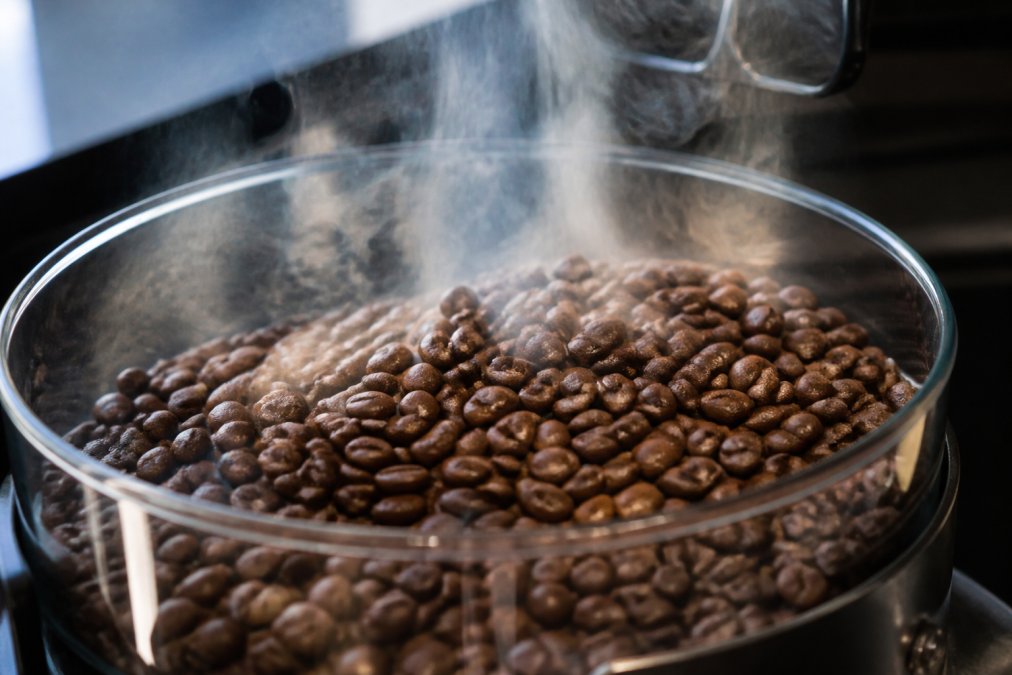
When coffee beans are roasted, they undergo the Maillard reaction, a chemical process that creates hundreds of flavor compounds and releases carbon dioxide trapped inside the bean. This CO2 doesn't escape instantly. It takes time for the gas to work its way out, and during this period, called degassing, the flavor profile is still changing.
The first 24-48 hours after roasting are critical. During this window, CO2 is actively escaping, and the beans are still releasing volatile compounds. If you brew coffee too soon, within the first day, the excess gas interferes with water extraction, producing an uneven, sour cup. Wait too long, and those volatile compounds have oxidized, leaving a flat taste. The sweet spot is typically 2-5 days after roasting, depending on roast profile and bean density.
This is where roasted to order coffee has a structural advantage. When your beans arrive 3-5 days post-roast, they're in the optimal degassing window. You're not fighting against over-carbonation or degraded aromatics. The coffee extracts cleanly, and you taste the roaster's intention. Mass-produced coffee, by contrast, has often completed its degassing phase weeks ago. The remaining CO2 has long since escaped, but so have the delicate flavor notes that make specialty coffee worth drinking.
Understanding degassing explains why freshness matters so much. It's not just about flavor fading, it's about the coffee's chemical state changing fundamentally. A roasted to order model keeps you in the window where extraction works best and flavor compounds are still vibrant.
:::pro-tip If your roasted to order coffee arrives and tastes sour or harsh, it likely needs more degassing time. Wait 2-3 more days before brewing. If it tastes flat, you've waited too long, prioritize using beans within 3 weeks of their roast date.
Peak Flavor Window for Coffee: When Your Beans Are at Their Best
The peak flavor window for roasted to order coffee typically spans 2-3 weeks from the roast date, with the optimal brewing window falling between days 5-14. This is when the beans have degassed enough for clean extraction while retaining maximum aromatic complexity.
Different roast profiles affect this timeline. Light roasts, with their higher acidity and delicate flavor notes, tend to peak earlier, around day 5-10. Medium roasts hit their stride around day 7-14, offering balanced acidity and body. Dark roasts, with their bolder, less volatile flavor compounds, maintain quality longer, often peaking between day 10-21. In each case, the roasted to order model ensures you're purchasing during or just before peak flavor, not after it's passed.
The decline after peak flavor is gradual but measurable. By week 4, most specialty coffee shows noticeable staleness. The brightness disappears. Acidity becomes sharp rather than clean. The body flattens. This is why roasted to order services emphasize roast dates, they're not marketing gimmicks. They're the single most important indicator of whether a bean is worth brewing.
For maximum freshness, use your roasted to order coffee within 2-3 weeks of the roast date printed on the bag. This window gives you time to enjoy the coffee at its best without rushing through it. After that, the coffee is still drinkable, but you're no longer tasting what the roaster intended.
How to Store Roasted Coffee Beans for Maximum Freshness
Storage conditions directly impact how long your roasted to order coffee maintains peak flavor. The four enemies of freshness are oxygen, light, heat, and moisture. Minimize exposure to all four, and your beans stay vibrant longer.
Use an airtight container designed for coffee storage. One-way valve bags, the kind roasted to order coffee typically ships in, are excellent because they allow CO2 to escape during degassing while preventing oxygen from entering. Once you open the bag, transfer remaining beans to an airtight container. Glass jars with rubber seals work well. Avoid clear containers; light degrades flavor compounds quickly.
Store your container in a cool, dark place. Room temperature is fine, you don't need to refrigerate or freeze your coffee unless you plan to store it for more than a month. Freezing can work if done correctly (use an airtight container, thaw before opening to avoid condensation), but it's unnecessary for beans you'll use within 2-3 weeks. Avoid the kitchen counter, above the stove, or near windows. Even indirect sunlight contributes to oxidation.
Grind only what you'll brew within a few hours. Ground coffee has exponentially more surface area exposed to oxygen, causing rapid flavor loss. Whole beans from your roasted to order shipment stay fresh far longer than pre-ground alternatives. If you must buy pre-ground, use it immediately, the flavor advantage of roasted to order coffee disappears within days of grinding.
| Storage Method | Timeframe | Best For | Notes |
|---|---|---|---|
| Original valve bag, unopened | 3-4 weeks | Fresh delivery | Allows degassing while blocking oxygen |
| Airtight container, room temp | 2-3 weeks | Regular brewing | Keep in dark cupboard |
| Sealed container, cool/dark | 3-4 weeks | Moderate use | Temperature stability extends freshness |
| Freezer, airtight container | 1-2 months | Long-term storage | Thaw unopened to prevent condensation |
Roasted to Order vs. Mass-Produced: What Actually Changes
The practical differences between roasted to order coffee and mass-produced alternatives extend beyond flavor. They touch supply chain transparency, bean freshness, roast profiles, and how the coffee reaches your hands.
Mass-produced coffee is roasted in large batches weeks or months before reaching retail shelves. The roaster has no direct relationship with the end consumer, so there's no incentive to optimize for peak flavor at purchase. The goal is shelf stability and consistency across thousands of units. This drives roasters toward darker, more forgiving profiles that mask staleness better. It also means beans spend time in warehouses, distribution centers, and retail environments, all places where oxidation accelerates.
Roasted to order coffee inverts this model. The roaster roasts specifically to fulfill orders, meaning beans go from roaster to shipper to your door in days, not weeks. The roaster has direct feedback from customers, creating incentive to optimize roast profiles for freshness and flavor. You see the roast date on the bag. You know exactly when your beans were roasted. There's no mystery or guesswork.
The supply chain transparency is substantial. With roasted to order coffee, you're supporting a direct relationship between roaster and consumer. Al Di Là, for example, sources beans and roasts to order, eliminating storage delays. You know your coffee hasn't been sitting in a distributor's warehouse losing flavor. You know it hasn't been exposed to temperature fluctuations or light degradation.
Health Benefits of Fresh Roasted Coffee
Fresh roasted coffee contains higher levels of certain compounds associated with health benefits compared to stale coffee. The primary compound of interest is chlorogenic acid, a polyphenol with antioxidant properties that begins degrading as soon as roasting completes.
The Supply Chain Advantage of Small-Batch Roasting
The environmental and efficiency benefits of roasted to order coffee stem from its supply chain structure. Small-batch roasting reduces waste, minimizes transportation distance, and lowers the overall carbon footprint compared to mass-production models.
Frequently Asked Questions
What does roasted to order mean?
Roasted to order means beans are roasted after you place your purchase, not weeks or months before. This ensures your coffee begins its peak flavor window immediately upon arrival rather than sitting in warehouse inventory. The roasting process triggers the maillard reaction and caramelization, which develop the complex flavor compounds you taste in each cup. Beans roasted to order retain their aroma and volatile compounds far longer than pre-roasted alternatives.
How long does roasted to order coffee stay fresh?
Freshly roasted beans remain at peak flavor for 2-4 weeks after roasting, depending on storage conditions and roast profile. Light roasts typically maintain their brightness and acidity longer, while dark roasts develop optimal body within the first week. After the peak flavor window closes, beans gradually lose solubility and aromatic compounds through oxidation. Proper storage in an airtight container away from heat extends freshness significantly.
Will I actually taste the difference between roasted to order and store-bought coffee?
Yes. Roasted to order coffee delivers noticeably brighter aroma, sharper flavor notes, and fuller body because the beans haven't oxidized during storage. Store-bought beans often sit on shelves for weeks or months, losing chlorogenic acid, polyphenols, and volatile aromatic compounds. Even without expertise, most people detect fresher coffee through smoother extraction, reduced bitterness, and more pronounced flavor notes. The difference becomes obvious in the first sip.
What's the environmental impact of roasted to order coffee compared to mass production?
Small-batch roasting reduces waste. It eliminates the carbon footprint of long-term storage and warehouse holding. Roasted to order models typically use oxygen-free sealing and minimal packaging since beans ship fresher and require less protective material. The supply chain transparency of small roasters also enables direct sourcing, reducing intermediaries and transportation emissions versus mass-produced alternatives.