

Why Your Coffee Tastes Sour and How to Fix It
Last Updated: November 2, 2026
Quick Summary
Sour coffee is usually caused by under-extraction, meaning the water did not pull enough of the sweeter, heavier flavor compounds from the grounds. The fastest fix is to grind one step finer, then brew again and taste, changing only one variable at a time.
- Grind one small step finer, then brew again and taste before changing anything else.
- Espresso should run in the 25 to 30 second window for a 1:2 dose-to-yield shot.
- Use a coffee-to-water ratio of about 1:15 to 1:17 for filter coffee, measured with a scale.
- Let boiling water rest 30 to 60 seconds before pouring if you have no thermometer.
- Keep a brew log recording grind, temperature, brew time and ratio to see what works.
Table of Contents
- Why Does Coffee Taste Sour? The Core Cause Explained
- Under-Extracted Coffee: The Primary Culprit Behind Sourness
- How to Fix Sour Coffee: A Step-by-Step Adjustment Sequence
- Coffee Grind Size for Sour Coffee: Finding Your Starting Point
- Why Does Espresso Taste Sour (and Cold Brew Too)?
- Pleasant Acidity vs. Sourness: How to Tell the Difference
- Your Next Brew: Dialing In a Balanced Cup at Home
- Frequently Asked Questions
Why Does Coffee Taste Sour? The Core Cause Explained
If your coffee tastes sour after brewing, you are not alone, and the cause is usually fixable.
Coffee is made of hundreds of compounds. Some dissolve quickly in hot water, like the bright acids that give fruit and citrus notes.
This is why the same beans can taste sour one morning and balanced the next. The beans did not change.
Under-Extracted Coffee: The Primary Culprit Behind Sourness
Under-extraction is the most common reason coffee tastes sour. The water passes through the grounds too fast, or the grounds are too large, so the water never has time to dissolve the sweeter, heavier compounds.
Signs of under-extraction include:
- A sharp, puckering sourness on the sides of the tongue
- A thin or watery body
- A short, flat finish with little sweetness
A common mistake is assuming all sourness is bad. Some coffees, especially light roasts from certain origins, are naturally acidic. The difference is balance. Pleasant acidity is bright and layered, with sweetness behind it.
How to Fix Sour Coffee: A Step-by-Step Adjustment Sequence
The fastest way to fix sour coffee is to change one variable at a time, taste, and repeat. Changing everything at once makes it impossible to know what worked. Before you touch a setting, run a quick diagnostic so you fix the actual cause instead of guessing.
First, Diagnose Before You Adjust
Use the sensory clues in your cup to narrow the likely cause.
| What you taste or see | Likely cause | First adjustment |
|---|---|---|
| Sharp sourness, thin body, short finish | Under-extraction from grind too coarse or brew too fast | Grind one step finer |
| Sour and weak, but body is okay | Ratio too low (too much water) | Increase dose or reduce water |
| Sour with a dry, harsh edge | Uneven extraction or channeling | Improve bed prep and pour evenness |
| Sour only in espresso, shot runs fast | Grind too coarse or dose too low | Grind finer, then check dose |
| Sour cold brew after a few hours | Steep too short or grind too coarse | Extend steep or grind finer |
| Sourness that fades as the cup cools | Likely natural acidity, not a fault | No fix needed; adjust to taste |
If more than one clue applies, fix the first row that matches, brew again, and re-taste. Do not stack changes.
Step 1: Adjust Grind Size First
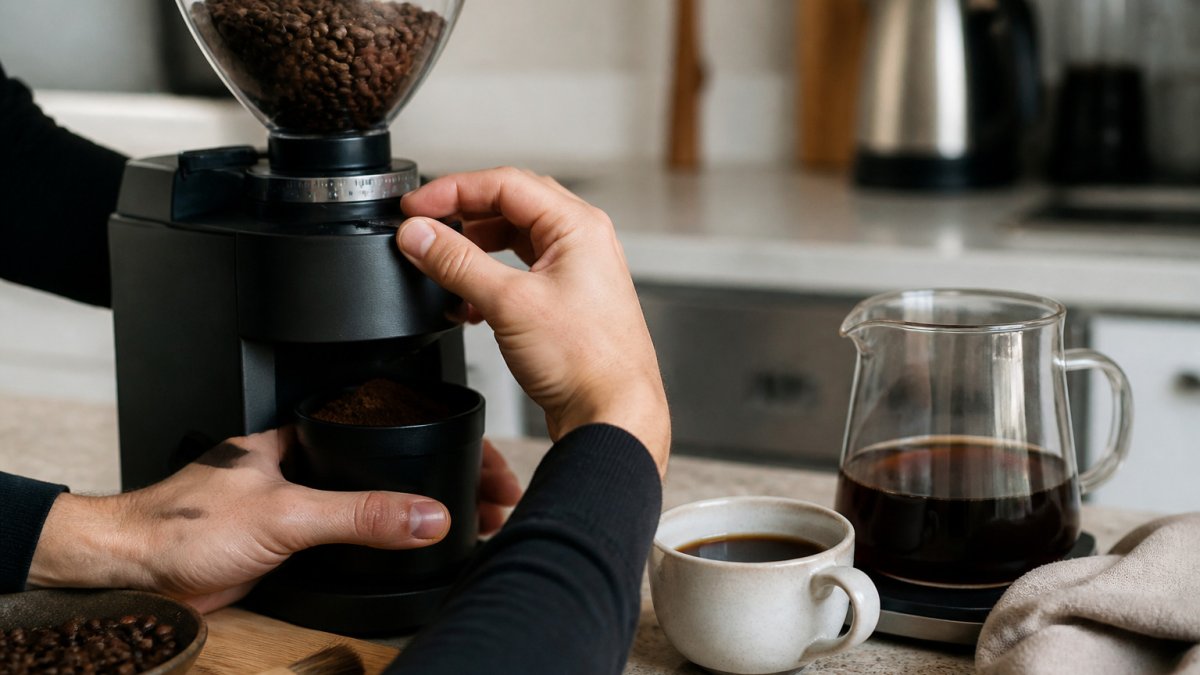
Grind size controls how fast water moves through the coffee. Finer grounds have more surface area, so water extracts more flavor. If your coffee tastes sour, try grinding finer by one small step, then brew again. On most home grinders, one step is a single click or notch; on stepless grinders, move in small increments and note the setting.
- Espresso: Grind finer until the shot takes roughly 25 to 30 seconds for a 1:2 dose-to-yield shot (for example, 18 g in, about 36 g out). If the shot still tastes sour at 30 seconds, check dose and distribution before grinding finer.
- Pour-over: Go one step finer than your current setting. If the drawdown slows past about 4 minutes for a single cup, back off one step.
- Drip machine: Go slightly finer, but avoid a grind so fine that the basket clogs or the brew cycle stalls.
Step 2: Raise Water Temperature and Extend Brew Time
Hot water extracts more efficiently. If your water is too cool, the sour acids dissolve first and the sweeter compounds are left behind. If you use a kettle without a thermometer, let boiling water rest for 30 to 60 seconds before pouring.
Brew time, or contact time, works alongside temperature. A longer contact time gives water more chance to pull out sweetness. Use these starting points and adjust from there:
- Pour-over: Aim for a total brew time of about 2:30 to 3:30 for a single cup. If it finishes under two minutes, slow the pour or use a finer grind.
- Drip machine: A full cycle typically runs 4 to 6 minutes. If it finishes much faster, the grind is likely too coarse.
- French press: Steep 4 minutes before pressing. If sour, extend to 5 minutes before changing grind.
Step 3: Check Your Coffee-to-Water Ratio
Too little coffee for the amount of water produces a weak, sour cup. A common starting point is a ratio of about 1:15 to 1:17 for filter coffee, which means 1 gram of coffee for every 15 to 17 grams of water.
A useful tip: if you are using a scoop, the same scoop can hold very different weights depending on the grind and bean density. A scale removes that guesswork.
Step 4: Fix Uneven Extraction and Channeling
If grind, temperature, time, and ratio are in range and the cup is still sour, the problem may be uneven extraction. Channeling happens when water finds a path of least resistance through the coffee bed, so some grounds are over-extracted and others are under-extracted. The result is a cup that tastes both sour and harsh.
- Espresso: Distribute grounds evenly before tamping, and tamp level. A puck that is uneven or cracked channels water.
- Pour-over: Pour in a steady spiral and keep the bed level. A cone that drains unevenly or a filter that collapses causes channeling.
- French press: Stir gently after adding water so all grounds are saturated, then let the bed settle.
Step 5: Rule Out Equipment and Water
Old grounds left in a grinder or a clogged filter basket can change flavor and cause uneven extraction. Clean your grinder and brew basket regularly. Water quality matters too: very soft or heavily filtered water can taste flat and extract unevenly, while water with a moderate mineral content usually produces a more balanced cup. If your tap water tastes strongly of chlorine or is extremely soft, try filtered water with some mineral content before changing grind again.
Coffee Grind Size for Sour Coffee: Finding Your Starting Point
Choosing the right starting grind saves time. Use the table below as a guide, then adjust based on taste.
| Brew Method | Typical Grind | If Sour, Try | If Bitter, Try |
|---|---|---|---|
| Espresso | Fine | Finer | Coarser |
| Pour-over | Medium-fine | One step finer | One step coarser |
| Drip machine | Medium | Slightly finer | Slightly coarser |
| French press | Coarse | Medium-coarse | Coarser |
| Cold brew | Coarse | Longer steep | Coarser |
Always brew with fresh, clean equipment. Old grounds left in a grinder or a clogged filter basket can change flavor and cause uneven extraction, where some grounds are over-extracted and others are not.
Water quality matters too. Very soft or heavily filtered water can taste flat and extract unevenly. Water with a moderate mineral content usually produces a more balanced cup.
Why Does Espresso Taste Sour (and Cold Brew Too)?
Espresso and cold brew fail in different ways, so the fix for one rarely works for the other. Treat them as separate troubleshooting paths.
Espresso: Fast Shots and Thin Pucks
Espresso is especially sensitive to grind size, dose, and distribution. A shot that runs too fast usually tastes sour because water passes through the coffee before sweetness is extracted.
Work through these checks in order:
- Grind: If the shot runs fast and tastes sour, grind finer in small steps until you approach the 25 to 30 second window.
- Dose: If the basket is under-dosed, water has less coffee to extract from. Keep the dose consistent for your basket size.
- Distribution and tamp: An uneven puck channels water and produces sour and harsh notes at once. Distribute evenly and tamp level.
- Temperature: If your machine allows it, confirm brew temperature is in the normal espresso range, typically around 195°F to 205°F. A machine that runs cool can leave shots sour even when grind is right.
If the shot is sour but runs longer than 30 seconds, the problem is more likely distribution, dose, or temperature than grind.
Cold Brew: Time Does the Work
Cold brew is different because it uses time instead of heat. Cold water extracts more slowly, so the same coffee can taste sour if it steeps for too short a time or is ground too coarsely for the steep length. Many home brewers find that cold brew tastes sour when it is only steeped for a few hours and balances out with a longer steep.
Use these starting points:
- Steep time: Start at 12 to 18 hours at room temperature or in the refrigerator. If sour, extend toward 18 hours before changing grind.
- Grind: Medium-coarse to coarse. If the brew is sour after 18 hours, go slightly finer rather than steeping beyond a day, which can pull bitter and woody notes.
- Ratio: A common concentrate ratio is about 1:4 to 1:5 coffee to water, then dilute to taste. A weak, sour concentrate often means too little coffee, not too little time.
Light Roasts and Natural Acidity
Light roasts also taste more acidic than darker roasts. Roast level is not a flaw, but if you are new to light coffee, expect more brightness and adjust your brewing to draw out more sweetness. Before you chase sourness out of a light roast, taste it against a darker roast brewed the same way. If the light roast is bright but sweet and the dark roast is flat, your brewing is likely fine and the difference is the bean.
Pleasant Acidity vs. Sourness: How to Tell the Difference
Acidity is a desirable quality in good coffee. It adds brightness, the way a squeeze of lemon lifts a dish. Sourness is the unpleasant version, and it usually means the coffee needs more extraction.
Use this quick check:
- Pleasant acidity: bright, fruity, layered, and followed by sweetness
- Under-extracted sourness: sharp, sour, thin, and fading quickly
- Over-extracted bitterness: dry, harsh, and lingering
Try tasting the coffee as it cools. Acidity often becomes more pleasant as it cools, while under-extracted sourness stays harsh. Keep notes on each adjustment so you can compare results over time.
Your Next Brew: Dialing In a Balanced Cup at Home
Start with one change: grind a step finer, or raise the water temperature. Brew, taste, and write down what you did.
For a fresh, well-balanced starting point, try our Breakfast Blend, a medium roast from South America with a smooth profile.
Once you have a recipe you enjoy, record the grind setting, water temperature, brew time, and ratio. A written log turns every cup into a repeatable result.
Last Updated: November 2, 2026
Frequently Asked Questions
Is coffee supposed to be sour?
Some coffee has a bright, pleasant acidity, especially light roasts from fruit-forward origins such as Costa Rica or Colombia. That acidity should feel lively and balanced, with sweetness behind it. Sourness that makes the cup sharp, puckering or thin usually signals that the coffee was under-extracted. The fix is typically a finer grind, slightly longer contact time or hotter water. Start by tasting a cup brewed with a slightly finer grind to see whether the sharpness softens and the sweetness comes forward.
Does sour coffee mean it is under-extracted?
In most home brewing cases, yes. Under-extraction happens when water does not dissolve enough of the coffee's sweet and balanced compounds before the brew ends. Acids dissolve first, so a brew that has not extracted fully tastes sour and hollow. Other causes include uneven extraction from channeling, water that is too cool, or a grind that is too coarse for the brew time. Changing one variable at a time shows which factor is responsible.
Why does my espresso taste sour?
Espresso is especially sensitive to grind size and extraction time. If the grind is too coarse, water passes through too quickly and pulls out acids before sugars and sweetness. A shot that runs in under 20 seconds often tastes sour for this reason. Try grinding one step finer, aim for a shot time of roughly 25 to 30 seconds and check that the puck is evenly tamped. Equipment cleanliness also matters, since old oils and residue can disrupt flow.
How do I fix coffee that tastes sour?
Work through the variables in order: grind size first, then water temperature, then brew time, then coffee-to-water ratio. Change one at a time and taste after each adjustment. For a drip or pour-over brew, go finer or slow the pour. For French press, grind finer and steep a little longer. Keep notes on what you changed, because the right combination depends on your grinder, your water and the roast you bought.
