

How to Store Coffee Beans Properly
Table of Contents
- Why Proper Storage Matters for Coffee Beans
- How to Store Coffee Beans After Opening
- Best Container for Coffee Beans
- Storage Location: Temperature, Light, and Humidity
- How Long Do Coffee Beans Stay Fresh
- Can You Freeze Coffee Beans
- Whole Beans Versus Ground Coffee Storage
- Maximizing Freshness and Flavor
- Frequently Asked Questions
Last Updated: October 11, 2026
Why Proper Storage Matters for Coffee Beans
How you store coffee beans properly determines whether your morning brew tastes fresh and vibrant or stale and flat. Coffee is fragile. Once roasted, beans begin losing flavor the moment they're exposed to air, light, heat, and moisture. These enemies work fast.
Even the finest beans lose their character without proper storage. The difference between a cup that tastes rich and smooth versus one that tastes dull comes down to how you handle storage after opening.
Whole beans stay fresh for 2-4 weeks when stored correctly; ground coffee lasts only 1-2 weeks. After that, aroma fades and flavor flattens noticeably.
How to Store Coffee Beans After Opening
Once you open a bag of coffee, minimize air exposure and protect beans from light, heat, and moisture:
- Transfer beans to an airtight container
- Keep the original bag's roast date visible for reference
- Store in a cool, dark place away from the kitchen stove
- Avoid the refrigerator or freezer unless you plan to keep beans longer than 4 weeks
Common mistakes: leaving beans in original bags with folded tops (oxygen seeps in slowly) or storing near heat sources like stoves (heat speeds flavor loss dramatically). Use a cool pantry or cabinet away from appliances instead.
Best Container for Coffee Beans
Airtight and Opaque Containers
The ideal container has two non-negotiable features: it seals out air completely and blocks light.
Airtight means oxygen cannot enter. Look for containers with rubber gaskets or one-way valves designed for coffee, these let carbon dioxide escape without letting oxygen in.
Opaque means light cannot penetrate. Sunlight and artificial light trigger chemical reactions that degrade flavor compounds. Clear glass jars expose beans to light every time you open a cabinet; dark glass or metal containers protect beans far better.
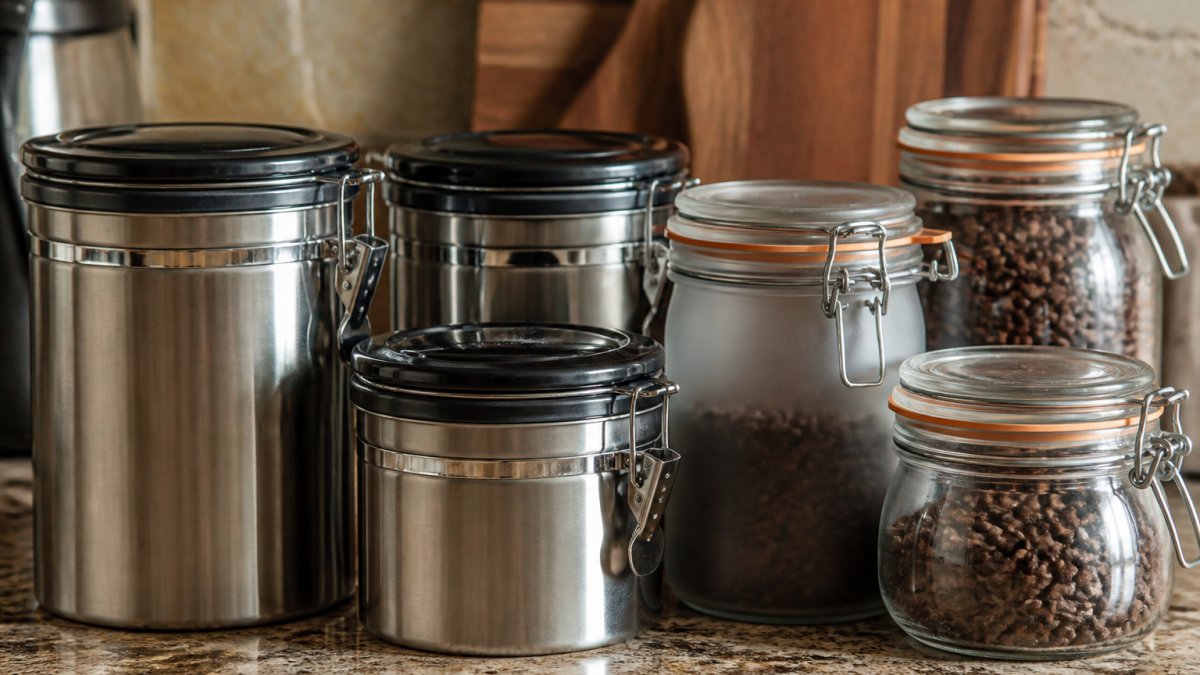
The best containers combine both features: stainless steel canisters with rubber gaskets, dark glass jars with airtight lids, or ceramic containers with tight seals.
Avoid plastic containers. They're porous and allow oxygen to pass through slowly. They also absorb odors and oils from beans, affecting taste over time.
Avoiding Common Container Mistakes
Avoid containers that fail on one critical dimension:
- Clear glass jars (light exposure)
- Plastic containers (oxygen permeability)
- Loose-fitting lids that don't seal fully
- Containers stored on open shelves or near windows
- Bags with simple fold-top closures
Vacuum-sealed containers can damage beans by crushing them if packed too tightly; use only for long-term freezer storage and pack loosely.
Storage Location: Temperature, Light, and Humidity
Where you store beans matters as much as what container you use. The ideal location is cool, dark, and dry.
Temperature and Flavor Degradation
Temperature should ideally stay between 50-70°F. Stability matters more than exact temperature; swings cause beans to expand and contract, forcing air in and out.
Heat is the primary enemy. For every 10°F increase above 70°F, flavor loss roughly doubles. At 90°F or higher, the freshness window shrinks from 4 weeks to 2-3 weeks. Avoid storing beans near stoves, ovens, radiators, or in direct sunlight.
Cool locations extend freshness significantly. A basement at 55-60°F preserves beans longer than a kitchen pantry at 72°F.
Light and Chemical Breakdown
Light accelerates flavor loss through photodegradation. Sunlight and even indirect light cause measurable degradation. Artificial light also matters; beans in brightly lit cabinets degrade faster than in dark pantries.
Store containers in a cabinet, drawer, or pantry rather than on counters or open shelves. A clear glass jar on a sunny counter will taste noticeably stale within 1-2 weeks, even if airtight.
Humidity and Moisture Damage
Humidity introduces moisture that promotes mold, clumping, and accelerated staling. Keep beans away from steam sources: stoves, dishwashers, and cooking areas. A dry pantry is far better than a humid kitchen cabinet. In naturally humid climates, ensure excellent container seals and store in cool, dry locations like basements.
Diagnosing Storage Problems
If beans taste stale faster than expected: flat taste within 1-2 weeks suggests heat or light exposure; musty smell suggests moisture; clumping suggests temperature fluctuation or humidity; sour taste suggests mold. Storing beans on open shelves for convenience costs 1-2 weeks of freshness.
How Long Do Coffee Beans Stay Fresh
Whole beans stored in an airtight, opaque container in a cool place stay fresh for 2-4 weeks, with peak flavor in the first 2 weeks. Ground coffee lasts only 1-2 weeks because grinding increases surface area exposed to oxygen. Grind just before brewing.
The roast date matters more than the packaging date. Storage conditions dramatically affect freshness: beans in a clear jar on a sunny counter taste stale within 1 week, while the same beans in an airtight, opaque container in a cool pantry stay fresh for 4 weeks.
Can You Freeze Coffee Beans
Freezing extends shelf life significantly, but it's not always the right choice. The decision depends on how quickly you use coffee and how much you buy at once.
Freezing vs. Refrigeration
Freezing works well for long-term storage. At 0°F or below, flavor degradation slows dramatically. Beans can stay acceptable for 3-6 months in a freezer, compared to 2-4 weeks at room temperature. The cold slows oxidation and volatile compound loss.
Refrigeration is not recommended. Fridges are humid with frequent temperature fluctuations that damage flavor faster than room-temperature storage and promote mold and clumping. Avoid unless freezing isn't an option and you need storage longer than 2-3 weeks.
The Condensation Problem and How to Prevent It
The main drawback of freezing is condensation. When frozen beans warm to room temperature, moisture condenses on the surface, the same way a cold glass fogs up when brought into a warm room. This surface moisture can introduce staleness faster than if you'd stored beans at room temperature from the start.
To minimize condensation damage: (1) Keep beans frozen until just before use. (2) Thaw in a sealed, airtight container so condensation forms on the container, not the beans. (3) Wait 30 minutes to 1 hour before opening. (4) Grind immediately after thawing. Thawing in open air causes condensation to coat beans and staleness within a day or two.
Portioning for Freezer Storage
The best freezer strategy is portioning. Divide beans into small portions, enough for 1-2 weeks of use, and freeze each portion separately. This prevents you from repeatedly opening and closing a large container of frozen beans. Each thaw-freeze cycle damages flavor. Small portions mean each batch gets opened only once.
For frequent users (brewing 3-5 times per week):
- Portion beans into 1-week supplies
- Keep one portion at room temperature for current use
- Freeze the rest
- Move a new portion to the fridge 24 hours before you need it (optional; room-temperature thawing works fine if you use the sealed-container method)
For occasional users (brewing 1-2 times per week):
- Portion beans into 2-week supplies
- Freeze all but the first portion immediately upon arrival
- This approach keeps beans fresher longer than room-temperature storage
For single-dose brewing:
- Portion out exactly what you need for each brew (typically 0.5-1 oz per cup)
- Use small airtight containers or vacuum-sealed bags
- Thaw only the portion you need
- This maximizes freshness and eliminates waste
When to Freeze vs. Store at Room Temperature
Choose based on your usage rate and purchase size:
Store at room temperature if:
- You use coffee within 2 weeks of purchase
- You buy half-pound or smaller quantities
- You brew 3+ times per week
- You have a cool (50-70°F), dark storage location
Freeze if:
- You buy in bulk (1 lb or more) and use it over 4+ weeks
- You brew fewer than 2 times per week
- You want to extend freshness beyond 4 weeks
- You're storing beans for more than 2 weeks before first use
Avoid freezing if:
- You open and close the freezer portion multiple times per week (repeated thawing damages flavor)
- You don't have a sealed container for thawing
- You forget to thaw beans in advance and need them immediately
Labeling and Tracking Frozen Beans
Label each frozen portion with the roast date (not the freeze date). This helps you use older beans first and ensures you don't accidentally store beans for longer than 6 months. Beans frozen for 6+ months begin to lose flavor noticeably, even at 0°F.
If you freeze multiple portions at once, consider numbering them (Portion 1, Portion 2, etc.) and using them in order. This prevents you from accidentally thawing the oldest beans last.
Whole Beans Versus Ground Coffee Storage
Whole beans and ground coffee have different storage needs because grinding changes how quickly beans oxidize.
Whole beans have minimal surface area exposed to oxygen. The interior of each bean stays protected. This is why whole beans last 2-4 weeks while ground coffee lasts only 1-2 weeks.
Ground coffee has vastly more surface area. Grinding breaks beans into tiny particles, each one exposed to oxygen. The flavor loss accelerates exponentially. Even in perfect storage conditions, ground coffee stales much faster.
The practical implication is clear: buy whole beans and grind just before brewing. This single choice extends freshness significantly. If you must buy pre-ground coffee, use it within 1-2 weeks and store it in the coldest, darkest location available.
Some people grind large batches to save time. This is a false economy. You lose far more flavor than you gain in convenience. Grinding takes 30 seconds. The flavor difference is worth those 30 seconds every morning.
Maximizing Freshness and Flavor
Proper storage is the foundation, but a few additional practices maximize what you get from your beans.
Buy smaller quantities more frequently. A half-pound of beans used within 2 weeks tastes better than a full pound used over 6 weeks. Smaller purchases mean fresher stock.
Check the roast date before buying. Beans roasted yesterday taste noticeably different from beans roasted 2 weeks ago. If you have a choice, pick the more recent roast date.
Grind immediately before brewing. This single step makes more difference than any storage technique. Whole beans stored perfectly for 4 weeks will taste better freshly ground than pre-ground beans stored perfectly for 1 week.
Use the right brewing method for your beans. Different roasts and origins shine with different methods. A light roast might taste bright in a pour-over but muddy in a French press. Experiment to find what works.
Store your grinder in a cool place too. Grinders generate heat during use, and storing a warm grinder in sunlight accelerates flavor loss in any remaining grounds inside.
When Al Di Là roasts beans to order, we're giving you a head start on freshness. But that advantage only lasts if you store beans properly from the moment they arrive. The commitment to quality begins with how we roast and continues with how you store.
Proper storage transforms how your daily coffee tastes. The difference between stale and fresh beans is dramatic, one tastes flat and hollow, the other rich and full. Get started with Al Di Là's fresh, roasted-to-order beans and store them using these methods to experience the full potential of exceptional coffee.
Frequently Asked Questions
How do you store coffee beans after opening?
Store opened coffee beans in an airtight, opaque container kept in a cool, dry place away from direct light and heat. Keep the container sealed between uses to minimize air exposure and moisture. For best results, store in a pantry or kitchen cabinet rather than on a counter where temperature fluctuates. Properly stored opened beans maintain peak freshness for 2-4 weeks.
What is the best container for storing coffee beans?
The best container is airtight and opaque to block light and prevent oxygen exposure. Glass jars with rubber seals, metal canisters with tight-fitting lids, or specialty coffee storage containers work well. Avoid clear containers, paper bags, and plastic bags that allow light penetration and air exchange. Ensure the container is food-safe and has no odors that might transfer to the beans.
Can you freeze coffee beans to keep them fresh?
Yes, you can freeze coffee beans to extend freshness for 3-4 months. Portion beans into small, airtight containers or freezer bags to minimize condensation when thawing. Keep frozen beans sealed until ready to use, and grind directly from the freezer without thawing first to prevent moisture absorption. Avoid repeated freezing and thawing, which damages flavor and aroma.
How long do coffee beans stay fresh after opening?
Properly stored whole coffee beans stay fresh for 2-4 weeks after opening when kept in an airtight, opaque container in a cool, dry place. Ground coffee loses flavor much faster, within 1-2 weeks. Roast date matters significantly; beans roasted within the past 2 weeks offer optimal flavor. For maximum freshness and aroma, grind beans just before brewing.