

Medium Dark Roast for Cold Brew: The Complete Guide
Last Updated: November 10, 2026
Quick Summary
Yes, medium dark roast coffee is good for cold brew, and for many drinkers it is the best answer. A medium dark roast keeps enough origin character to taste like coffee rather than charcoal while carrying the chocolatey, nutty sweetness that cold extraction rewards.
- Dark roast became the cold brew default because it is forgiving and holds up to dilution with milk or water.
- Brew 100 grams of coarsely ground coffee to 400 grams of cold filtered water and steep 16 hours in the refrigerator.
- Use 1 part coffee to 4 parts water by weight for concentrate, or 1 part to 8 parts for ready-to-drink strength.
- Medium dark roasts punish sloppy ratios more than dark roasts, so a weak batch tastes thin rather than merely mild.
- For black cold brew, choose medium dark; for milk, cream, or syrups, dark roast holds up better.
Table of Contents
- Is Medium Dark Roast Coffee Good for Cold Brew? The Direct Answer
- How Roast Level Changes Cold Brew Flavor
- Medium Dark Roast vs. Dark Roast: A Side-by-Side Comparison
- The Best Roast for Cold Brew Depends on What You Want in the Cup
- Getting the Cold Brew Ratio Right for Medium Dark Beans
- Troubleshooting Weak, Bitter, or Muddy Cold Brew
- Medium Dark Roasts to Try from Al Di Là
- Brewing Your First Medium Dark Cold Brew
- Frequently Asked Questions
Is Medium Dark Roast Coffee Good for Cold Brew? The Direct Answer
Yes, medium dark roast coffee is good for cold brew, and for many drinkers it is the best answer. A medium dark roast sits in the sweet spot between brightness and depth: it keeps enough origin character to taste like coffee rather than charcoal, while carrying the chocolatey, nutty sweetness that cold extraction rewards.
Cold brewing is slow, low-temperature extraction: water pulls flavor compounds over many hours, and the roast level decides which compounds are there to pull.
How Roast Level Changes Cold Brew Flavor
Roast level is the degree to which green coffee beans are heated during roasting, and it determines which flavors end up in the cup. Lighter roasts keep more acidity and fruit; darker roasts trade those for caramelized, smoky depth.
Cold water is a gentle solvent, extracting fewer acids and bitter compounds than hot water, which is why cold brew tastes smooth. That gentleness lets the roast profile show through instead of being buried.
Why Dark Roast Is the Default Choice
Dark roast became the standard cold brew recommendation because it is forgiving: bold, chocolatey notes survive dilution with milk or water, and low acidity reads as smooth.
The trade-off is character. Push dark too far and the cup flattens into one note, with little aroma left to enjoy.
Where Medium Dark Roast Fits Between the Extremes
Medium dark is the compromise that doesn't feel like a compromise. You get caramel, cocoa, and nutty sweetness from the roast, plus a little fruit or floral lift from the bean itself. The body lands medium to full, and the finish stays clean.
Medium Dark Roast vs. Dark Roast: A Side-by-Side Comparison
The clearest way to understand the difference is to line up what each roast does in the same cold brew setup.
| Factor | Medium Dark Roast | Dark Roast |
|---|---|---|
| Flavor focus | Cocoa, caramel, nuts, light fruit | Dark chocolate, molasses, smoke |
| Acidity | Moderate, rounded | Low |
| Body | Medium to full | Full |
| Aroma after steeping | Retains some origin character | Muted, roast-forward |
| Best with milk | Yes, holds its own | Yes, very forgiving |
| Room for error | Moderate | High |
One honest limitation: medium dark roasts punish sloppy ratios more than dark roasts do. With more nuance to lose, a weak batch tastes thin rather than merely mild, while dark roast hides mistakes better.
What most comparison guides miss is that origin and processing can matter as much as roast. Our French Roast gives you a darker reference point to taste against medium dark beans in the same setup.

A Controlled Side-by-Side Tasting You Can Run at Home
To make the comparison useful rather than abstract, brew the same recipe with three beans: a medium roast, a medium dark roast, and a dark roast. Keep everything else identical so roast level is the only variable.
Use 100 grams of coarsely ground coffee to 400 grams of cold filtered water for each batch.
A common pattern: the medium roast reads brightest and most acidic, the medium dark lands in the middle with cocoa and caramel, and the dark roast tastes roast-forward with low acidity and heavier body.
Watch out: changing grind size or steep time between batches means you are no longer comparing roast levels.
Why Origin and Processing Can Override Roast Level
Roast level is only one input. A washed Ethiopian medium dark may still show floral and citrus notes, while a wet-hulled Sumatran medium dark can taste earthy and cedary at the same roast level. Processing changes the bean's chemistry before roasting, and variety changes it further.
That is why two bags labeled "medium dark" can brew very different cold brew. For a predictable starting point, ask what the bean is and how it was processed, not just how dark it was roasted. Our French Roast is a useful darker reference, but taste it against a medium dark from a different origin to see how much flavor comes from the bean rather than the roast.
The Best Roast for Cold Brew Depends on What You Want in the Cup
The best roast for cold brew is the one that matches how you drink it. If you take your cold brew black, a medium dark roast gives you sweetness and structure without the flatness of a heavy dark roast.
- Black, over ice: medium dark, for balance and aroma
- With milk or cream: dark roast, for backbone
- With sweeteners and flavor syrups: dark roast, so the coffee isn't lost
- Nitro-style: medium dark, for a rounder, creamier perceived texture
- Iced latte: medium dark, for sweetness that survives milk
Before you commit to a bag, it helps to know your own palate. Our guide on how to find your favorite coffee roast at home walks through a simple tasting approach so you can pick a roast level with confidence rather than guesswork.
Getting the Cold Brew Ratio Right for Medium Dark Beans
Use a coarse grind, roughly the texture of sea salt. Fine grounds slip through filters and leave the cup muddy. Steep for 12 to 18 hours at room temperature or 18 to 24 hours in the refrigerator, then strain twice.
A common mistake is adjusting the steep time before checking the grind. If your cold brew is weak, the grind is usually the culprit, not the clock. Keep water temperature consistent too; refrigerator steeping is slower but cleaner.

Dilution, Storage, and Serving
Concentrate is not a serving. Dilute 1:1 with water or milk over ice, then taste before adding more; if the concentrate is already balanced, use less water. Store covered in the refrigerator and drink within a week.
Troubleshooting Weak, Bitter, or Muddy Batches
Most cold brew problems trace back to three variables: grind size, ratio, and steep time. Fix them in that order and you will solve nearly every batch.
- Weak or watery: grind finer by one setting or tighten the ratio toward 1:4. Check that your filter isn't bypassing grounds.
- Bitter or harsh: your grind is too fine or you steeped too long. Coarsen the grind and cut two hours off the steep.
- Muddy or silty: fine particles are passing the filter. Coarsen the grind and strain through a paper filter after the first pass.
- Flat or lifeless: the beans are stale. Freshly roasted coffee carries the aromatics that cold water is trying to extract.
Bitterness is the most common complaint, and it usually has a single cause. Our focused guide on why your coffee tastes bitter and how to fix it covers the adjustments in more detail if you want to chase that problem down first.
Watch out: over-extraction in cold brew rarely tastes sharp the way it does in hot coffee. It tastes dull and woody, so people add more coffee and make the batch worse.
Caffeine and Strength Caveats
Caffeine depends on dose, bean, and preparation, not roast level alone. A darker roast does not automatically mean more caffeine per serving, and a stronger-tasting concentrate does not mean more caffeine. Distinguish concentrate strength from caffeine per serving when planning how much to drink.
Troubleshooting Weak, Bitter, or Muddy Cold Brew
Most cold brew problems trace back to three variables: grind size, ratio, and steep time. Fix them in that order and you will solve nearly every batch.
- Weak or watery: grind finer by one setting or tighten the ratio toward 1:4. Check that your filter isn't bypassing grounds.
- Bitter or harsh: your grind is too fine or you steeped too long. Coarsen the grind and cut two hours off the steep.
- Muddy or silty: fine particles are passing the filter. Coarsen the grind and strain through a paper filter after the first pass.
- Flat or lifeless: the beans are stale. Freshly roasted coffee carries the aromatics that cold water is trying to extract.
Bitterness is the most common complaint, and it usually has a single cause.
Watch out: over-extraction in cold brew rarely tastes sharp the way it does in hot coffee. It tastes dull and woody, so people add more coffee and make the batch worse.
Medium Dark Roasts to Try from Al Di Là
Our coffee is roasted to order, which keeps the aromatics fresh for cold brewing.
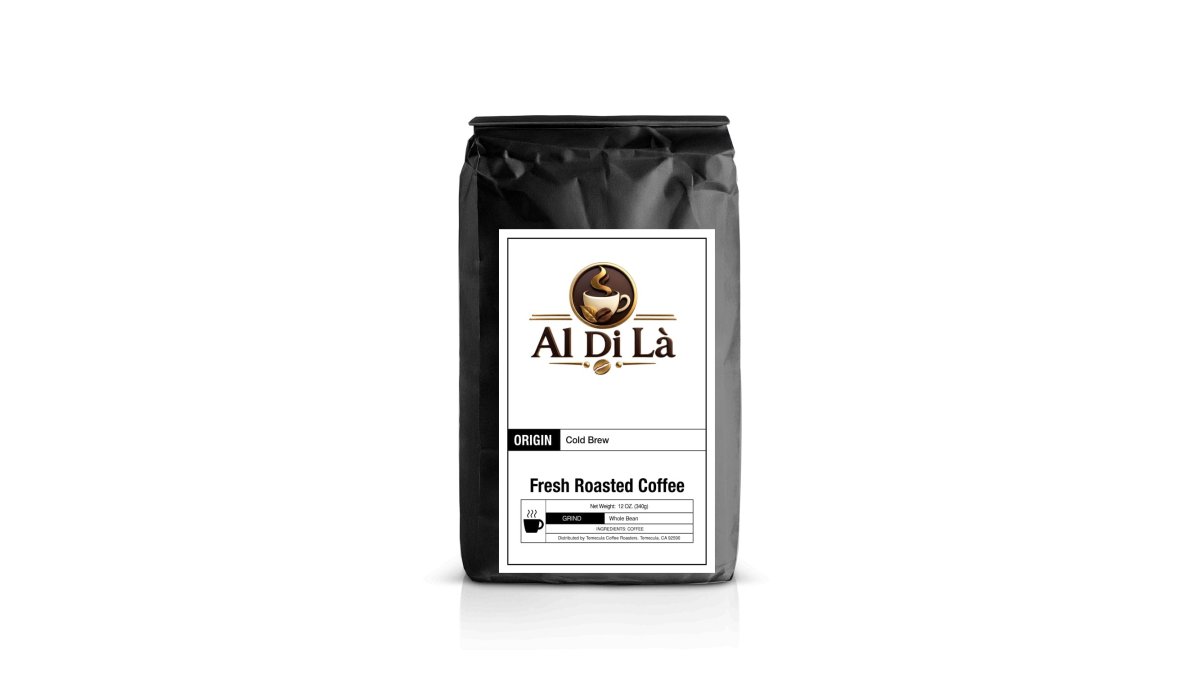
Cold Brew Coffee is our purpose-built pick: medium, with smooth chocolate, toffee, and floral tones, blended for cold brew and nitro.
Bali Blue brings dark chocolate, molasses, and brown sugar from smallholder farms in Kintamani. Best for: a dessert-leaning cup. Skip if: you want restraint.
All five are $24.99 and roasted to order. If you want the exact bag built for this method, start with Cold Brew Coffee.

Brewing Your First Medium Dark Cold Brew
Start with 100 grams of coarsely ground medium dark coffee and 400 grams of cold filtered water for a concentrate.
If you want a broader walkthrough of the fundamentals before your first batch, our complete home brewing guide covers grind, water, and technique in more depth.
The hardest part of cold brew isn't the steeping. It's choosing beans that still have something worth extracting.
Frequently Asked Questions
Should I use medium or dark roast for cold brew?
Either works, but they produce different cups. Dark roast gives you the classic cold brew profile: bold, chocolatey, low-acid, and forgiving if your ratio is slightly off. Medium roast keeps more origin character, so you taste fruit and caramel instead of mostly roast. Medium dark roast sits between the two, with enough roast depth for a rich concentrate and enough brightness to stay interesting. Start with medium dark if you want a smooth, balanced concentrate you can drink black or dilute with milk.
What is the best roast for cold brew if I like a smooth, low-acid cup?
The best roast for cold brew when smoothness is the goal is a medium dark to dark roast. Longer roasting reduces the green coffee acids that read as bright or sharp, and cold extraction adds another layer of softness because the water never gets hot. A medium dark roast like a Latin American blend delivers nutty, cocoa notes with mild fruit and very little bite. If you are sensitive to acidity, skip light roasts for cold brew and lean darker.
Does roast level affect cold brew caffeine content?
Less than most people expect. Caffeine is set by the coffee dose, not the roast color, so a scoop of medium dark and a scoop of dark contain nearly the same caffeine. Dark beans lose mass in roasting, so by weight a dark roast can be marginally higher, but the difference is small. The bigger lever is your cold brew ratio and how long you steep. A strong concentrate diluted 1:1 will deliver more caffeine per glass than a weak batch regardless of roast.
How does medium dark roast impact cold brew acidity?
Medium dark roast lowers perceived acidity compared with light and medium roasts. The roast development breaks down some of the acids that taste sharp, and cold immersion extracts fewer of them in the first place. You still get a gentle brightness that keeps the cup from tasting flat, which is the main advantage over a very dark roast. If a batch tastes sour or thin, grind finer or steep longer before assuming the roast is the problem.
What cold brew ratio should I use with medium dark roast coffee?
Start with a 1:5 coffee-to-water ratio by weight for a concentrate, roughly 100 grams of coarse ground coffee to 500 grams of water. Steep 14 to 16 hours at room temperature or 18 hours in the fridge, then filter. Dilute the concentrate 1:1 with water or milk for drinking. Medium dark beans extract easily, so if the first batch tastes muddy, coarse up the grind or shorten the steep rather than adding more coffee.
