

How to Taste the Difference in Freshly Roasted Coffee
Last Updated: November 17, 2026
Quick Summary
Freshly roasted coffee tastes better because the flavors created during roasting are still present when you brew it, while those flavors fade over time. Aroma goes first, often within a week or two, then sweetness and complexity dull, and freshness turns to flatness and eventually stale, papery notes.
- Whole bean coffee stays fresh for roughly two to four weeks after the roast date for peak flavor.
- Espresso needs 7-14 days of rest after roast, while pour-over needs 4-7 days.
- Store beans in an airtight, opaque container kept cool and dry, away from oxygen, moisture, heat, and light.
- Skip the fridge, since humid air condenses on cold beans and coffee absorbs surrounding food odors.
- Do a blind side-by-side tasting at day 3, day 7, and day 12, keeping dose, grind, water, ratio, and method identical.
Table of Contents
- Why Freshly Roasted Coffee Tastes Better: Aroma, Sweetness, and Complexity
- Coffee Degassing After Roasting: Why Fresh Beans Need Time to Breathe
- How Long to Rest Coffee After Roasting for Peak Flavor by Brew Method
- How Long Do Coffee Beans Stay Fresh? Roast Date, Shelf Life, and Signs of Staleness
- The Best Way to Store Coffee Beans: Oxygen, Moisture, and Light Exposure
- Freshly Roasted vs. Supermarket Coffee: What the Cup Actually Reveals
- How to Do a Side-by-Side Tasting of Coffee at Different Post-Roast Ages
- Ordering Coffee Roasted to Order from Al Di Là
- Frequently Asked Questions
Why Freshly Roasted Coffee Tastes Better: Aroma, Sweetness, and Complexity
Freshly roasted coffee tastes better because the flavors created during roasting are still present when you brew it. Those flavors fade over time.
At Al Di Là, we roast to order for exactly this reason. Coffee is a perishable flavor product, not a pantry staple. The clock starts ticking the moment beans leave the roaster.
Here is the core idea: freshly roasted coffee is coffee brewed within days of its roast date, while the beans still hold their aroma compounds and natural sweetness.
So what changes over time? Three things fade in sequence:
- Aroma goes first, often within a week or two
- Sweetness and complexity dull next
- Freshness turns to flatness, and eventually to stale, papery notes
Below, we'll show you exactly how to taste the difference yourself, and how to time your brewing around the roast date.
Coffee Degassing After Roasting: Why Fresh Beans Need Time to Breathe
Coffee degassing after roasting is the release of carbon dioxide trapped inside the bean (pubmed.ncbi.nlm.nih.gov). Roasting builds up gas pressure. Over the following days, that gas escapes.
This matters because gas fights water. When you pour hot water over very fresh beans, escaping carbon dioxide pushes the water away. The result is uneven extraction and a cup that tastes sharp or hollow.
A common mistake is brewing the day beans arrive and judging them too early. Give them a few days to settle.
The Role of Carbon Dioxide in Extraction and Flavor
Carbon dioxide is not the enemy. It is a freshness signal. Bubbles blooming when you pour hot water mean the beans still hold gas, which usually means recent roasting.
But too much gas blocks even wetting of the grounds. Let the beans rest, and extraction evens out. Flavor notes come through clearly instead of tasting muddled.
How Long to Rest Coffee After Roasting for Peak Flavor by Brew Method
The best resting time depends on your brew method. Espresso needs longer rest than drip. Here is the practical timeline we recommend:
| Brew Method | Rest After Roast | Why |
|---|---|---|
| Espresso | 7-14 days | High pressure amplifies excess gas |
| Pour-over | 4-7 days | Balanced bloom and even extraction |
| Drip machine | 3-7 days | Forgiving of slight gas |
| French press | 3-5 days | Long steep time smooths extraction |
| Cold brew | 5-10 days | Slow extraction benefits from settled beans |
Rest After Roast
Lighter roasts generally need a little more rest than dark roasts. Dark roasts degas faster because the bean structure is more open.
Try a cup at day three, day seven, and day twelve. Most people find their sweet spot somewhere in that range.
How Long Do Coffee Beans Stay Fresh? Roast Date, Shelf Life, and Signs of Staleness
Whole bean coffee stays fresh for roughly two to four weeks after the roast date for peak flavor. After that, quality declines steadily. Ground coffee fades much faster, often within days.
Stale coffee announces itself. Watch for these signs:
- No bloom when hot water hits the grounds
- Flat, papery, or cardboard-like smell
- Muted flavor with no distinct notes
- Oily, dull surface on beans that should look matte
Reading the Roast Date and Understanding the Freshness Window
A roast date tells you when the clock started. A "best by" date does not. Always look for the roast date, and treat the freshness window as weeks, not months.
If a bag has no roast date at all, that is a warning sign. You cannot judge freshness without one.
The Best Way to Store Coffee Beans: Oxygen, Moisture, and Light Exposure
The best way to store coffee beans is in an airtight, opaque container kept cool and dry, because oxygen, moisture, heat, and light each attack freshness through a different mechanism. Oxygen oxidizes the aromatic oils that carry fruity and floral notes. Moisture accelerates staling reactions and can promote mold. Heat speeds up the same degradation you are trying to slow. Light, especially ultraviolet, breaks down compounds near the bean surface. A good container addresses all four at once.
Here is how to protect your beans, with the reasoning behind each step:
- Keep them whole until just before brewing. Grinding multiplies the surface area exposed to oxygen, so ground coffee stales in days rather than weeks. Grind only what you will brew in the next few minutes.
- Use an airtight container with a one-way valve if possible. The valve lets carbon dioxide escape during degassing without letting oxygen in. A simple mason jar works, but a valve bag or canister is better during the first week after roasting.
- Store in a dark cupboard, away from the stove. Light degrades surface compounds, and heat from an oven or range accelerates staling. A cool, dark shelf is the default.
- Skip the fridge. Every time you open the door, humid air condenses on cold beans, and coffee absorbs odors from surrounding food. The fridge trades one problem for two.
- Freeze only for long-term storage, and never refreeze. Freezing whole beans in a sealed bag can preserve freshness for months, but each thaw cycle introduces condensation. Portion into single-use bags before freezing and let them come to room temperature sealed.
Watch out: a one-way valve bag that has been opened and rolled shut is not airtight. Once the seal is broken, transfer beans to a hard-sided airtight container or use a vacuum canister.
Measurable Signs of Staleness
Staleness is not just a feeling. You can observe it in the cup and on the bean:
- No bloom. When hot water hits fresh grounds, trapped carbon dioxide escapes and the bed puffs up. A flat, still bed means most gas is gone.
- Faint or papery aroma. Fresh beans smell sweet and specific. Stale beans smell like cardboard, sawdust, or nothing at all.
- Muted, one-note flavor. Sweetness and acidity flatten, and distinct origin notes blur into a generic coffee taste.
- Oily, dull surface on beans that should look matte. Surface oil can appear on dark roasts naturally, but a sudden sheen on a previously matte bean often signals oxidation.
- Uneven or fast extraction. Stale grounds can channel and drain quickly because the bed structure has changed.
For readers weighing storage gear, our guide on vacuum sealing coffee beans covers whether the extra step is worth it.
Freshly Roasted vs. Supermarket Coffee: What the Cup Actually Reveals
Freshly roasted coffee, by contrast, reaches you days after roasting. The gap shows up in the cup:
- Aroma jumps out of a fresh bag; stale bags smell faint
- Sweetness reads clearly in fresh coffee; stale coffee tastes flat
- Complexity shifts cup to cup when fresh; stale coffee tastes one-note
If you want to go deeper on buying, our buyer's guide to freshly roasted coffee beans for sale walks through what to look for on the label.
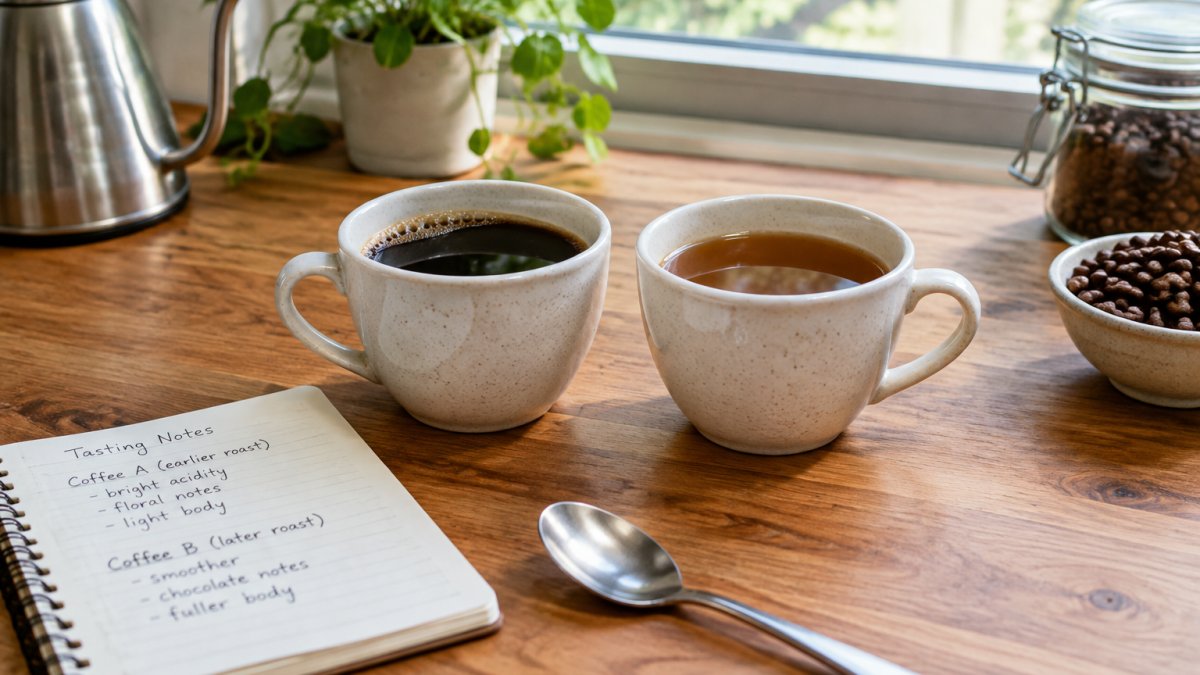
How to Do a Side-by-Side Tasting of Coffee at Different Post-Roast Ages
A side-by-side tasting can help you compare the difference yourself, if you control the variables. The goal is to change one thing, post-roast age, and hold everything else constant so the difference you taste can be attributed to freshness rather than grind, dose, water, or technique.
Set Up a Controlled Comparison
Start with one coffee, ideally a light or medium roast with clear origin character, and divide it into portions you will brew at different ages. A practical schedule is day 3, day 7, and day 12 after the roast date. Store each portion the same way, in an airtight container in a dark cupboard, so storage is not a variable.
Before brewing, lock these variables:
- Dose. Weigh the same amount of coffee for each cup, within a tenth of a gram if your scale allows.
- Grind. Use the same grinder setting for all cups. If you change grind, you change extraction, and the comparison collapses.
- Water. Use the same water source and temperature for every brew. A simple digital thermometer helps.
- Ratio. Keep the coffee-to-water ratio identical, for example 1:16 by weight.
- Method. Brew all cups with the same device and the same pour or steep timing.
Label the cups A, B, and C so you taste blind. Have someone else pour if you can, or shuffle the cups after brewing so you do not know which age is which.
Taste in a Fixed Order and Score What You Find
Smell each cup first, then taste. Use a simple scoring sheet with four categories, rated 1 to 5:
- Aroma. Does it jump out, or is it faint and papery?
- Sweetness. Is there a clear, pleasant sweetness, or does the cup taste flat?
- Complexity. Can you name distinct notes, or does everything blur into one flavor?
- Finish. Does the flavor linger cleanly, or turn hollow and dry?
Write your impressions before revealing which cup is which.
Watch out: brewing all cups back to back means the later cups sit and cool while you taste the earlier ones. Taste in the same order you brew, or brew each cup just before you evaluate it, so temperature does not skew your scores.
Keep the brewing method identical to make the comparison fair. Our guide on brewing fresh coffee at home like a barista covers the details that keep a tasting honest.
Ordering Coffee Roasted to Order from Al Di Là
At Al Di Là, we roast to order for maximum flavor and aroma. Delivery is fast and reliable, and ordering stays simple.
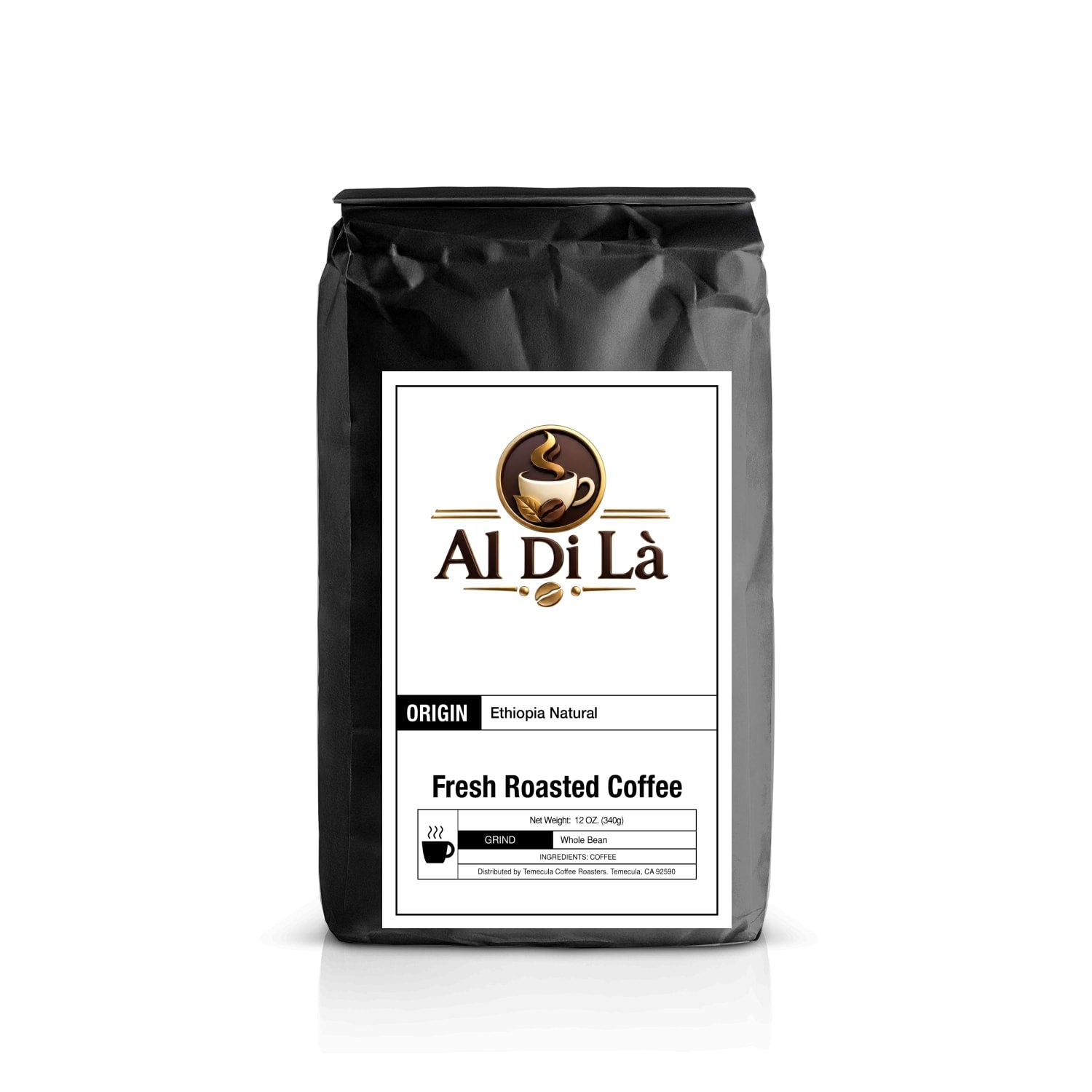
Start with our Ethiopia Natural for bright, fruity notes, or try the Single Origin Favorites Sample Pack to compare origins side by side. Curious how fresh coffee reaches your door? Read how fast roasted-to-order delivery works, or explore the deeper case for roasted-to-order coffee benefits.
The difference between fresh and stale coffee is not subtle once you taste it side by side. It is the difference between a cup with layers and a cup that just tastes brown.
Frequently Asked Questions
Does freshly roasted coffee taste better?
Yes, within the right window. Freshly roasted coffee retains more volatile compounds, natural sweetness, and complexity than coffee that has sat on a shelf. But brewing it the day it is roasted can taste flat or overly gassy because carbon dioxide is still escaping.
How long should coffee rest after roasting before brewing?
Rest coffee degassing after roasting for at least three to four days for filter methods and five to seven days for espresso. Light roasts often need seven to ten days to open up, while dark roasts can be ready in three to five. If the cup tastes sharp or foamy, give it another two days and try again. A small test brew each morning is the simplest way to find the peak.
How long do coffee beans stay fresh, and how should I store them?
Whole beans stay at their best for about two to four weeks after the roast date, and remain drinkable for up to eight weeks if stored well. The best way to store coffee beans is in an airtight, opaque container at room temperature, away from light, heat, and moisture. Skip the refrigerator and freezer for daily-use beans, and buy in amounts you will finish within a month.
Why can coffee taste worse immediately after roasting?
Coffee degassing after roasting releases carbon dioxide for several days. That gas interferes with water contact during brewing, so extraction becomes uneven and the cup can taste sour, flat, or thin. The roast also needs time for flavor compounds to settle.
