

Single Origin vs Blend Coffee Explained?
Last Updated: October 26, 2026
Quick Summary
Single origin vs blend coffee comes down to sourcing: single origin coffee beans trace to one defined source like a farm, cooperative, or region, while a blend combines beans from two or more origins. Single origin highlights distinct flavor profiles from one place, whereas blends offer consistency and balanced flavor across multiple sources.
- Single origin can mean a single farm, producer, cooperative, or region depending on the roaster's definition.
- Coffee is best within 2-4 weeks of roasting, so check the roast date on the label.
- Single-origin labels should show farm or cooperative, region, and harvest year for tight traceability.
- Blend labels ideally disclose component origins and proportions, though many roasters do not.
- Neither single origin nor blend is inherently better; the choice depends on whether you prefer variety or consistency.
Table of Contents
- What Single Origin Coffee Means
- What a Coffee Blend Means
- Single-Origin Coffee Benefits and Flavor Profiles
- Coffee Blend Benefits and Consistency
- Best Coffee Beans for Espresso
- How to Tell if Coffee Beans Are Fresh
- Choosing Between Single Origin and Blend for Your Daily Cup
- Frequently Asked Questions
What Single Origin Coffee Means
Single-origin coffee is coffee whose beans trace to one defined source, but what counts as 'one source' varies by roaster, importer, and country of origin. That ambiguity is worth understanding when exploring single origin vs blend coffee, because two bags labeled 'single origin' can mean different things.
- Single farm (or single estate): All beans come from one farm. This is the tightest definition and the one most specialty roasters mean when they say 'single origin.' Traceability is highest, and the cup reflects one producer's decisions.
- Single producer: All beans come from one farmer or farming family, even if grown across multiple adjacent plots. Common with smallholder coffees where a producer delivers cherry from several parcels.
- Single cooperative or washing station: Beans from many smallholders are pooled and processed together at one facility. The lot shares a processing method and a delivery window, but not a single field.
- Single region: Beans from a defined growing area, a zone, department, or state, pooled across many farms. This is the loosest common use, and it is what most supermarket 'single origin' labels actually mean.
What single origin does not mean: it does not guarantee a specific roast level, processing method, grade, or flavor. A single-origin coffee can be light or dark, washed or natural, and can taste bright, chocolatey, or savory. The term describes sourcing, not style.
Explore Al Di Là's single-origin coffees.
What a Coffee Blend Means
A coffee blend combines beans from two or more origins.
The House Blend combines select coffees from Central and South America into a smooth, clean cup with nutty, sweet chocolate, mild citrus, and a clean bright finish.
Single-Origin Coffee Benefits and Flavor Profiles
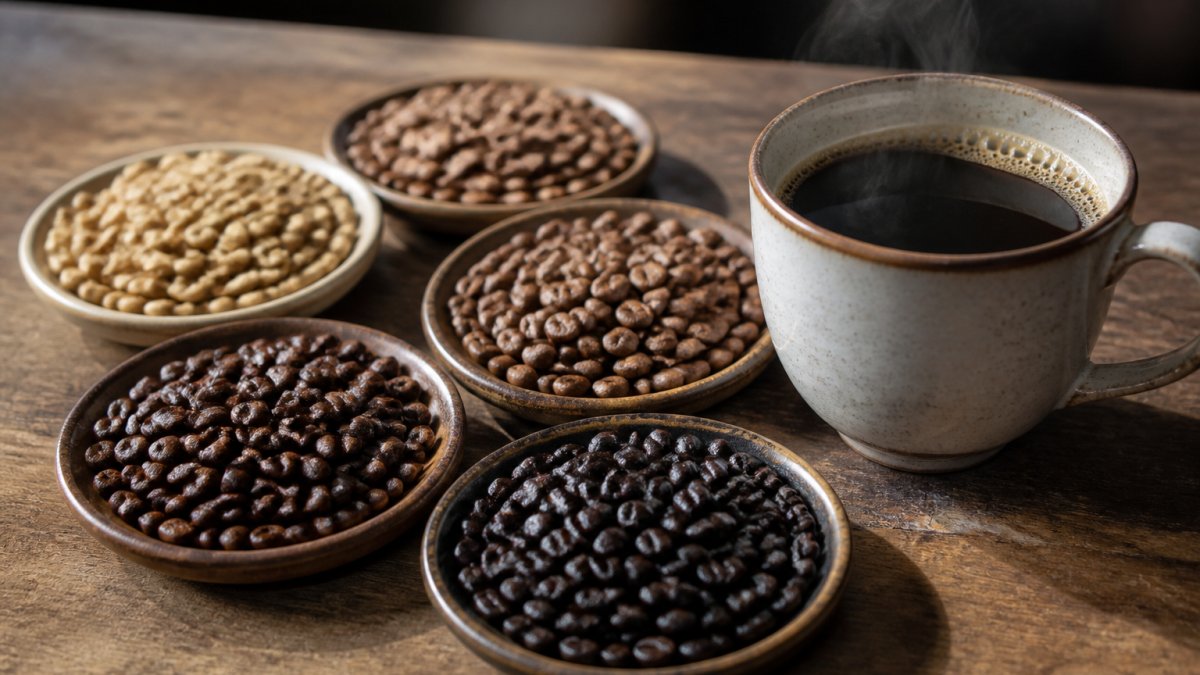
Consider Al Di Là's single-origin selections. Brazil Santos is described as an elegant, smooth cup with cocoa notes. Colombia has tasting notes of dried orange, berry, and chocolate. Ethiopia is a medium-light roast with milk chocolate, fruity, and caramel notes.
Try a curated sample pack of single-origin coffees to experience the flavor profiles discussed.

Coffee Blend Benefits and Consistency
Purchase a blend product to experience the consistency and balanced flavor benefits explained in this guide.
Best Coffee Beans for Espresso
Al Di Là's House Blend is a medium roast described as smooth, clean, and consistent, with a medium body. The Breakfast Blend is a medium roast described as a smooth blend of coffee from South America.
How to Tell if Coffee Beans Are Fresh
Learn detailed freshness indicators that complement this guide's coverage of how to identify quality beans.
Single Origin Favorites Sample Pack →
Al Di Là uses oxygen-free capsule sealing for freshness and roasts coffee to order for maximum flavor and aroma.
Choosing Between Single Origin and Blend for Your Daily Cup
Start with your brewing method.
- **
- **
- **
- **
Then weigh consistency against variety.
Read the label before you decide.
- Look for a roast date, not just a best-by date. Coffee is generally at its best within about 2-4 weeks of roasting.
- For single origin, look for the farm or cooperative, region, and harvest year. More specificity means tighter traceability.
- For blends, look for component origins and proportions if the roaster discloses them. Many do not; when components are undisclosed, you can reasonably infer only the roast level and general flavor direction, not the sourcing.
Al Di Là's listed single-origin coffees and blends are each priced at $24.99. Neither category is inherently better; the right pick depends on personal preference. Get comprehensive guidance on selecting the best coffee beans for daily drinking based on personal preference.
Check these label details to understand what you're buying and ensure freshness.
| Label Element | What to Look For | Why It Matters |
|---|---|---|
| Roast date | Date coffee was roasted, not best-by date | Coffee is best within 2-4 weeks of roasting |
| Single-origin details | Farm or cooperative, region, harvest year | More specificity means tighter traceability |
| Blend details | Component origins and proportions | Helps you understand sourcing and flavor |
| Freshness seal | Oxygen-free capsule sealing | Preserves maximum flavor and aroma |
Frequently Asked Questions
What is the difference between single-origin coffee and a blend?
Single-origin coffee comes from a single source, while a blend combines coffees from multiple origins. Al Di Là's House Blend combines select coffees from Central and South America and is described as smooth and clean, with nutty, sweet chocolate, mild citrus, and a clean bright finish. The choice depends on your preference.
Is single-origin coffee better than a blend?
Neither is objectively better; the choice depends on your preferences. Al Di Là's single-origin coffees have varied tasting notes, while its House Blend is described as smooth and clean, with nutty, sweet chocolate, mild citrus, and a clean bright finish.
How can you tell if coffee beans are fresh?
Fresh coffee beans show a glossy sheen or slight oil on the surface and release aroma when you open the bag. Roast date matters most: beans roasted within the past two weeks deliver peak flavor and aroma. Check for uniform color without faded patches, which signal age or poor storage. Listen for a crisp snap when you bend a bean; stale beans crumble. Store beans in an airtight container away from light, heat, and moisture to preserve freshness for up to four weeks after roasting.
Which is better for espresso: single-origin coffee or a blend?
Al Di Là's House Blend is a medium roast described as smooth, clean, and consistent, with a medium body. The Breakfast Blend is a medium roast described as a smooth blend of coffee from South America.
The difference between single-origin and blend coffee isn't about quality, it's about what you're looking for in your cup. At Al Di Là, we craft both with the same commitment to freshness and flavor. Whether you choose a single-origin that reflects a specific place or a blend designed for consistency, the key is starting with beans roasted to order and sealed for maximum aroma. That foundation transforms your daily coffee from ordinary to something worth savoring.
