

Which Specialty Coffee Beans Are Worth Buying for Home?
Quick Summary
The best specialty coffee beans for home are single-origin coffees that list their grower, region, processing method and roast date. Light and medium roasts such as Ethiopia Natural, Kenya and Tanzania suit pour-over, while Honduras and Brazil Santos suit French press and espresso.
- Look for a printed roast date, since beans are generally at their best within a few weeks of roasting.
- Choose single-origin beans that list grower, region, altitude, variety and processing method.
- Ethiopia Natural, Kenya and Tanzania are bright, fruity picks for pour-over, priced at $24.99.
- Honduras and Brazil Santos are medium to medium-dark options that suit French press and espresso.
- The Single Origin Favorites Sample Pack costs $25.99 and includes six 2 oz packs to compare first.
Table of Contents
- What Makes a Specialty Coffee Bean Worth Buying
- How to Tell If Coffee Beans Are Fresh
- Our Top Picks: Al Di Là Single-Origin Coffee Beans Compared
- Best Coffee Beans for Espresso at Home
- Matching Roast Level and Brew Method
- How to Store Coffee Beans So They Stay Fresh
- Choosing Your Starter Sample Pack from Al Di Là
- Frequently Asked Questions
What Makes a Specialty Coffee Bean Worth Buying
Specialty coffee beans are graded and traced to a specific farm, region or lot, and they are roasted with the aim of showing that origin in the cup. For a side-by-side look at the best delivered premium beans, see premium coffee beans delivered to home.
Three things separate a worthwhile bean from an ordinary one. The first is the roast date. Beans are generally at their best within a few weeks of roasting, so a printed roast date is more useful than a vague "best by" stamp. The second is the processing method, since washed, natural and pulped natural coffees can taste different.
Price per bag is a weak guide on its own. A clearly documented single-origin bag often gives you more to taste than a larger bag of an unlabeled blend.
How to Tell If Coffee Beans Are Fresh
Freshness is the single biggest variable you control after you buy, and it is also the easiest thing for a roaster to hide. A printed roast date, a one-way degassing valve, and a few sensory checks will tell you more about a bag than any "best by" stamp ever will. Our guide to telling whether coffee beans are fresh walks through each check.
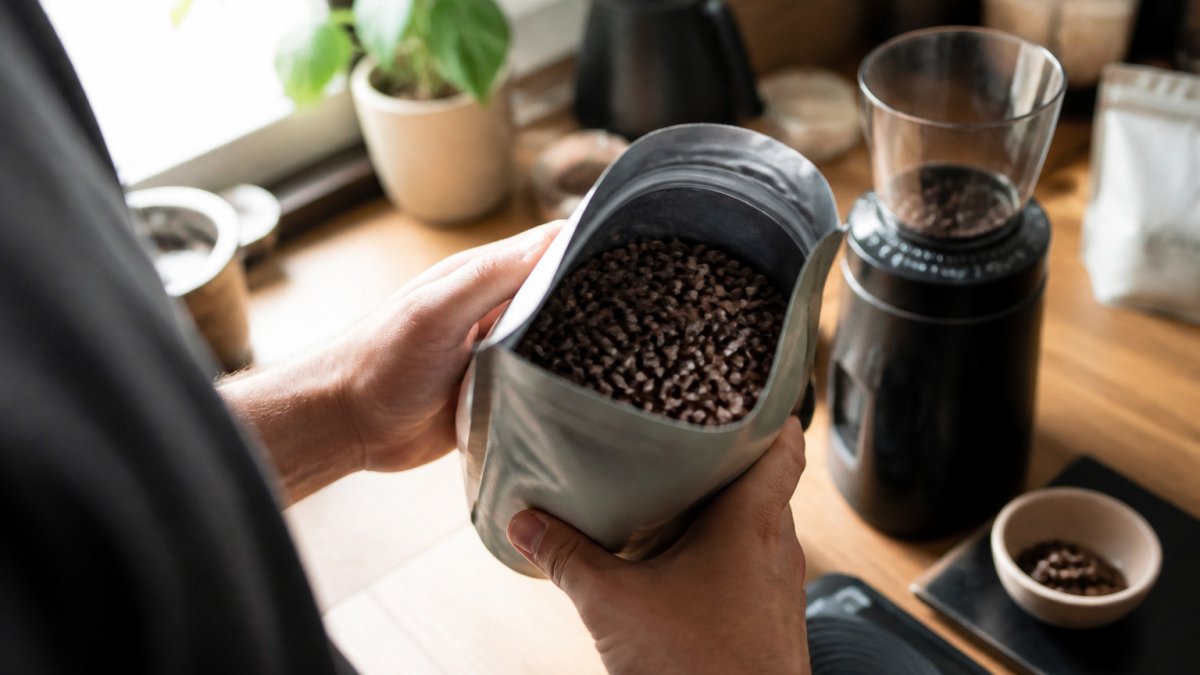
Read the roast date, not the best-by date
A roast date tells you exactly how old the coffee is. A best-by date tells you when the roaster thinks the bag should be sold, which can be many months after roasting. Many specialty roasters ship within a few days of roasting, and beans often peak somewhere in the first few weeks after the roast date, depending on the coffee and the brew method.
Understand degassing
Right after roasting, beans release carbon dioxide (pubmed.ncbi.nlm.nih.gov). That gas is why a freshly roasted bag can look puffed and why a sealed bag with a one-way valve may hiss or smell sharply when you open it. Degassing is normal and desirable: too much CO2 in the bean can make espresso pour unevenly and can flatten the aroma of a pour-over.
Sensory checks that actually mean something
- Smell: Fresh beans smell sweet, aromatic, and specific, you should be able to pick out the notes the roaster describes. Flat, papery, or cardboard smells suggest the coffee has staled.
- Look: Beans should be even in color for their roast level. A slight sheen of oil is normal on medium-dark and dark roasts; heavy oiliness on a light roast is a warning sign.
- Feel: Fresh beans are dense and cool to the touch. Very lightweight, brittle beans have often lost moisture and aroma.
Match freshness to your brew method
Espresso is the most sensitive to degassing, beans that are only a day or two off the roast can produce gushy, inconsistent shots, so many home baristas rest espresso beans for about 5 to 10 days after the roast date. Pour-over and drip are more forgiving and often taste best in the first two to three weeks. French press sits in between.
What to ask before you buy
- What is the roast date on the bag you will ship?
- Does the bag have a one-way valve?
- Is the coffee shipped whole bean, and how is it packaged?
A roaster who can answer these questions quickly is usually a roaster worth buying from. When shopping, look for a bag that lists its roast date and ships whole bean in a valve-sealed bag, so you can judge freshness yourself.
Our Top Picks: Al Di Là Single-Origin Coffee Beans Compared
Single-origin coffees are easiest to choose from by flavor. Below, we group the coffees by the profiles they most often produce in the cup, so you can start with what you already like.
Fruity and Bright Origins
Ethiopia Natural ($24.99) is our pick for drinkers who want fruit forward coffee. It is a med-light roast with a milk chocolate, fruity and caramel profile, grown by smallholder farmers in the Sidama Zone and dried on raised beds. Kenya ($24.99) brings bright acidity with orange, lemon and floral notes, from farms in Nyeri County. Tanzania ($24.99) is a med-light roast with pear, jasmine and strawberry notes, grown in the Mbeya Region.
Chocolate and Caramel Origins
Brazil Santos ($24.99) is a medium roast with an elegant, smooth cup and cocoa notes, pulped natural and dried in the sun. Honduras ($24.99) is a medium-dark roast with caramel, spice and brown sugar notes, and it suits drinkers who want a fuller body. Sumatra ($24.99) has a syrupy body with dark chocolate and dried fruit notes, and an earthy finish.
| Coffee | Roast | Main Notes | Starting Price |
|---|---|---|---|
| Ethiopia Natural | Med-light | Milk chocolate, fruity, caramel | $24.99 |
| Kenya | Not specified | Bright acidity, orange, lemon | $24.99 |
| Tanzania | Med-light | Pear, floral, strawberry | $24.99 |
| Brazil Santos | Medium | Cocoa, smooth | $24.99 |
| Honduras | Medium-dark | Caramel, spice, brown sugar | $24.99 |
| Sumatra | Not specified | Dark chocolate, dried fruit | $24.99 |
Best Coffee Beans for Espresso at Home
Espresso asks more of a bean than filter coffee does, because the short, pressurized extraction brings out body and sweetness quickly. Many home baristas prefer medium to medium-dark roasts for espresso, since they tend to produce a rounder shot with less sharp acidity.
Single Origin Favorites Sample Pack →
Lighter roasts such as Kenya or Tanzania can still make a bright espresso, but they usually need more dialing in and taste best as filter coffee.
Matching Roast Level and Brew Method
Roast level and brew method work together. Lighter roasts keep more of their origin character and acidity, which suits pour-over and drip brewing, where the flavor comes through clearly. For a full walkthrough, see our complete guide to brewing better coffee at home. Medium and medium-dark roasts hold up well in French press and espresso, where heavier body and sweetness are welcome.
Here is a simple way to choose:
- Pour-over or drip: Choose a med-light coffee such as Ethiopia Natural, Kenya or Tanzania to highlight the fruit and floral notes.
- French press: Choose a medium or medium-dark coffee such as Brazil Santos, Costa Rica or Honduras for a fuller, sweeter cup.
- Espresso: Choose a medium-dark coffee such as Honduras, and grind finer than you would for filter.
Many drinkers find that switching brew method, rather than switching beans, changes the cup most.
How to Store Coffee Beans So They Stay Fresh
Most storage advice stops at "keep it airtight." The useful version explains what you are actually fighting, oxygen, moisture, heat, light, and time, and how each choice changes the rate at which your beans fade. Our guide to storing coffee beans properly covers container choices in more detail.
The four enemies, ranked
- Oxygen is the main driver of staling. It oxidizes the aromatic oils that carry flavor, which is why a half-empty bag left open for a week tastes flat.
- Moisture accelerates staling and can encourage mold. Beans should stay dry, which is why the refrigerator is usually a bad idea.
- Heat speeds up the chemical reactions that flatten flavor. A cabinet above the stove is worse than a cool pantry shelf.
- Light degrades oils over time. An opaque container beats a clear glass jar on a sunny counter.
Container choices, compared
- The original valve bag, rolled and clipped: Good for short-term storage if the bag has a one-way valve. It is not truly airtight once opened, so it works best if you finish the bag within a couple of weeks.
- Airtight opaque canister: The practical default. Look for a silicone gasket and a clamp or screw lid. Fill it close to the top to minimize headspace, which is where oxygen sits.
- Vacuum containers: Useful if you buy large bags or drink slowly. Removing air slows oxidation, but the improvement over a well-sealed canister is modest for beans you will finish within a month.
- Single-dose tubes or vials: The most protective option for espresso, because each dose stays sealed until you grind it. The trade-off is cost and counter space.
Should you freeze coffee?
The old advice was a flat no. The more accurate answer is: it depends on how you freeze it. Freezing whole beans in an airtight, moisture-proof bag can preserve flavor for months, but only if you do three things: freeze fresh beans, freeze them in portions you will use in one go, and let each portion come to room temperature before opening the bag.
Grind size and timing
Whole beans stay fresh far longer than ground coffee because the surface area exposed to oxygen is much smaller. Grind only what you need, right before brewing. If you must grind ahead, store the grounds in an airtight container in the dark and use them within a few days, but expect a noticeable drop in aroma compared with grinding to order.
A practical routine for a home kitchen
- Buy in quantities you will finish in about two to four weeks.
- Transfer beans to an airtight, opaque canister and keep it in a cool, dark cabinet.
- Keep a small amount in a countertop canister for daily use and store the rest sealed.
- Label the canister with the roast date so you always know how old the coffee is.
Choosing Your Starter Sample Pack from Al Di Là
If you are new to single origins, the Single Origin Favorites Sample Pack ($25.99) is the easiest way to compare. It contains six 2 oz packs of our most popular single-origin coffees, so you can taste the differences between regions before you commit to a full bag.

Start with the coffee whose profile matches what you already enjoy. Drinkers who like sweet, chocolatey cups often start with Brazil Santos or Honduras. Those who prefer bright, fruity coffee tend to prefer Ethiopia Natural, Kenya or Tanzania.
Frequently Asked Questions
What are the best specialty coffee beans for home brewing?
The best choice depends on how you brew. For a bright, fruity cup, Al Di Là's Kenya ($24.99) has bright acidity with orange, lemon and floral notes, and Ethiopia Natural ($24.99) has milk chocolate, fruity and caramel notes. For a sweeter, more rounded cup, Brazil Santos ($24.99) has cocoa notes and Guatemala ($24.99) has dark chocolate and butterscotch notes. If you are unsure, the Single Origin Favorites Sample Pack ($25.99) lets you compare six origins in 2oz packs before committing to a full bag.
How can you tell if coffee beans are fresh?
Check the roast date first. Specialty beans are best within a few weeks of roasting, so a printed roast date is more useful than a best-by date. Fresh beans have a noticeable aroma when you open the bag and a slight sheen on the surface, which is natural oil from the roast. Beans that smell flat, papery or stale, or that have no visible aroma at all, have usually lost much of their flavor.
Which coffee beans are best for espresso at home?
Espresso generally works best with medium to medium-dark roasts that have sweetness and body. Al Di Là's Honduras ($24.99), a medium-dark roast with caramel, spice and brown sugar notes, is a option to consider for espresso. Brazil Santos ($24.99) with its cocoa notes also suits espresso blends. Grind fresh before each shot, since espresso is far more sensitive to freshness than drip coffee.
How should you store specialty coffee beans at home?
Keep beans in an airtight container away from light, heat and moisture. Store them at room temperature in a cool cupboard rather than the fridge or freezer, since condensation can damage them. Grind only what you need, because ground coffee stales much faster than whole beans.
